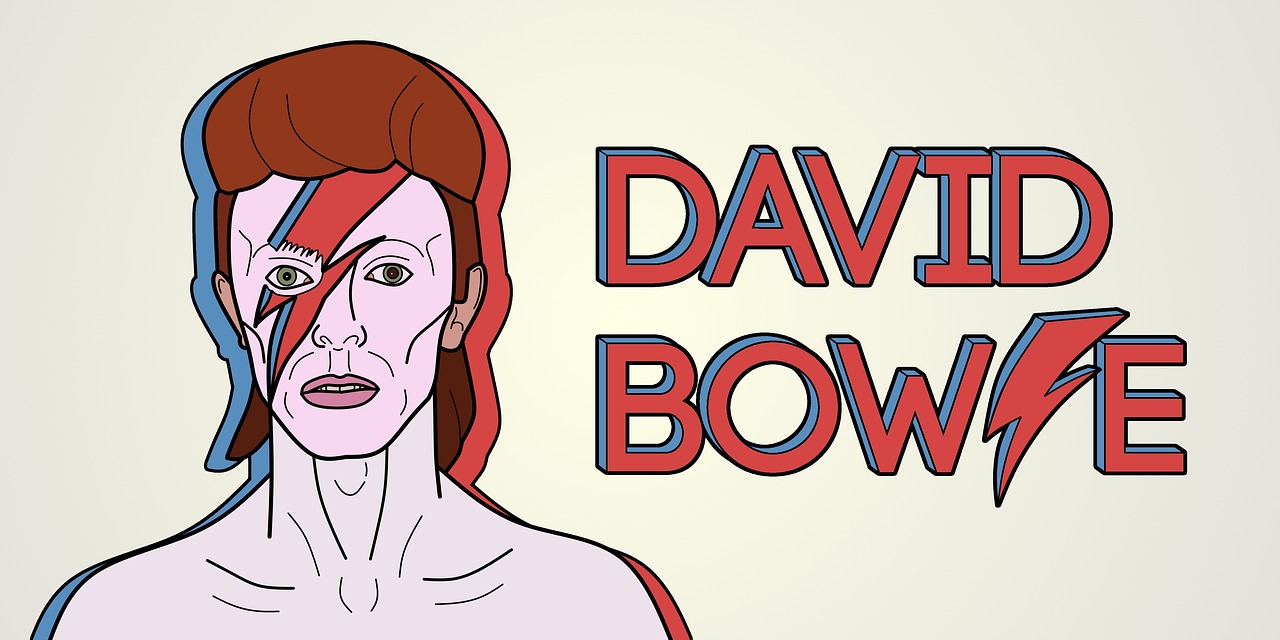
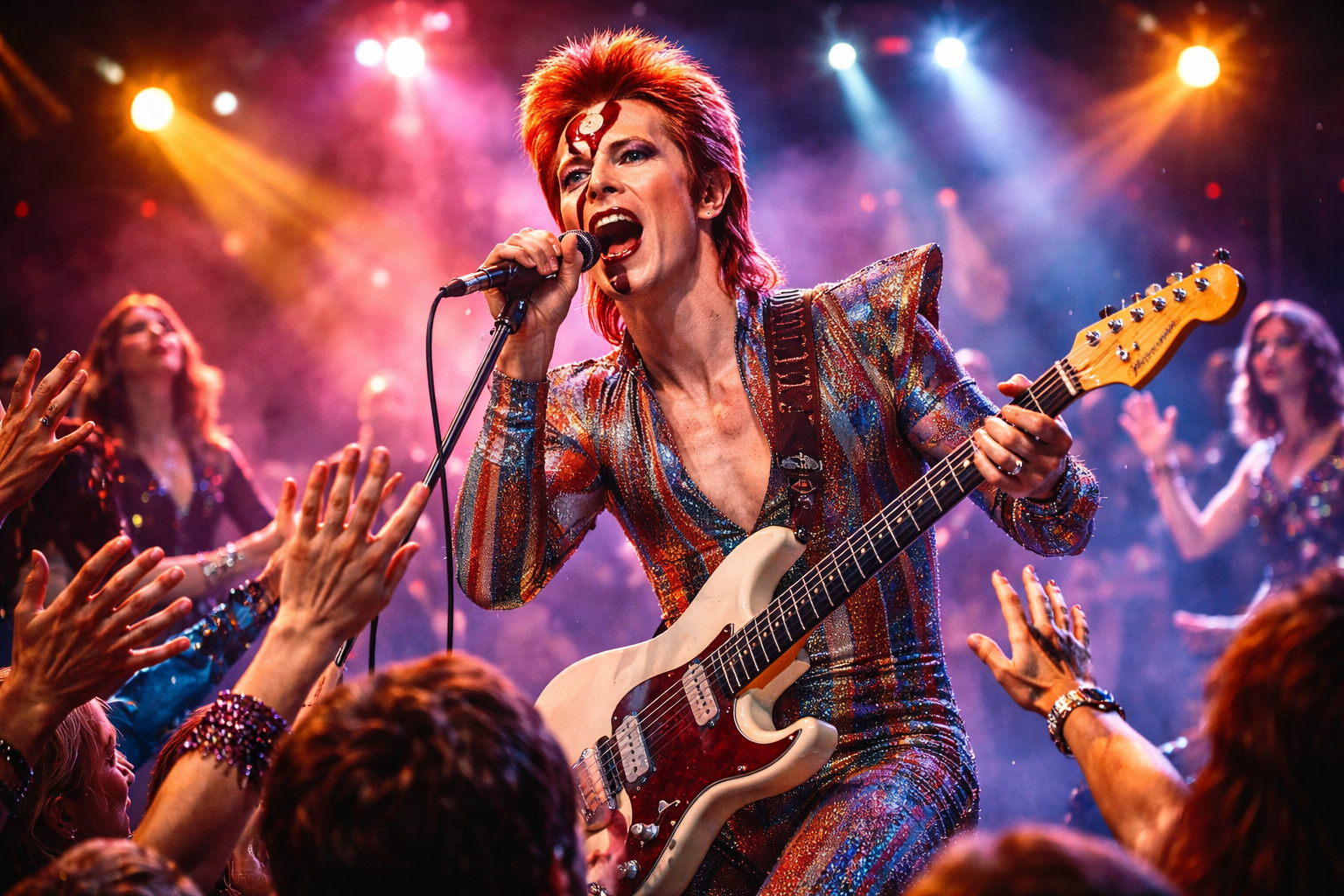
When people talk about David Bowie, they don’t just talk about the songs. They talk about the characters, the looks, the way he seemed to come from another planet. And at the center of all that sits Ziggy Stardust, the red‑haired, makeup‑faced alien rock star who landed in 1972 and changed music, fashion, and pop culture in one bright, bizarre flash.
So what exactly was the impact of David Bowie’s Ziggy Stardust persona? In short: Ziggy shook the idea of what a rock star could look like, how they could behave, and even who their audience might be. It pushed gender lines, upgraded the importance of image, and helped invent what we now think of as “performance art” in pop music.
Below, we’ll break down how Ziggy Stardust changed music, how it reshaped gender and identity in pop culture, and why people still care about a fictional alien rock star more than 50 years later.
How Ziggy Stardust Changed Music and Performance
Before Ziggy, rock stars were mostly “real” guys in jeans and leather. They might dress up a bit, but the image was usually just background to the music. Bowie flipped that. With Ziggy Stardust he turned the whole show into the point: the red hair, the lightning‑bolt face paint, the tight suits, the space‑rock story, the way he sang as Ziggy rather than just as himself.
Ziggy was the star of a mini rock opera: an alien messenger sent to Earth in the last five years of the planet’s life, trying to bring a message of hope while slowly getting corrupted by fame and sex. This kind of storytelling—where character, costume, vocals, and album all fit together—wasn’t new, but it hadn’t been done in such a campy, theatrical, pop‑accessible way. Ziggy made rock feel like a space‑age musical you could dance to, not just a jukebox.
Musically, Ziggy Stardust blended glam rock, hard rock, and art‑rock into something catchy but still weird. Songs like “Starman,” “Suffragette City,” and “Ziggy Stardust” pulled in young fans who wanted something flashier than classic rock and more rock‑based than pure pop. The result was that Bowie didn’t just get a new sound; he created a new template for how albums could tell a story and still climb the charts.
Live shows became part of the myth, too. Bowie’s Ziggy tours in the early seventies were wild. The stage, the lights, the Spiders from Mars, the way he spaced‑walked across the stage—it all felt like a futuristic theater piece first, and a concert second. That raised the bar for other artists, who realized that if they wanted to stand out, they couldn’t just play well; they had to perform well.
Artists that came after Ziggy—everyone from Queen and the Rolling Stones to Eurythmics, Lady Gaga, and even parts of Kanye West’s persona—took notes on how Bowie used character, costume, and irony to keep his audience guessing. In other words, Ziggy didn’t just influence glam rock; he helped teach pop music that theatricality and image are part of the music itself.
Shaking Up Gender, Sexuality, and Identity
Maybe Ziggy’s most powerful impact wasn’t about clothes or concerts, but about what people felt allowed to be. In the early 1970s, talking openly about being bisexual or experimenting with gender‑bending fashion was still risky in many places. Bowie didn’t just whisper about it; he sang it and wore it on stage.
Ziggy Stardust blurred the lines between male and female, “normal” and “weird,” human and alien. He wore makeup, androgynous suits, and openly flirted with both men and women in interviews and songs. For young listeners who felt different—too geeky, too artsy, too queer, too “out there”—Ziggy was a permission slip. He showed that being confusing, mixed‑up, or in-between could be cool, even iconic.
Bowie’s Ziggy persona also helped normalize conversations about sexuality in pop. When he told the music press he was bisexual, it was bold, but it fit into how fans already saw Ziggy: a figure who could love anyone, look like anything, and still be the hero. That didn’t fix discrimination, of course, but it did give a lot of people a sense that they weren’t alone, that rock and pop could belong to outsiders too.
For many fans, Ziggy wasn’t just a character; he was a role model. He modeled a kind of self‑invention: you don’t have to be born in one fixed box; you can build and rebuild your identity. That idea—“you can be whoever you want to be on stage and maybe off it too”—became a core part of modern pop culture.
Turning the Rock Star into a Character, Not Just a Person
Before Ziggy, most famous musicians were seen as “real” people who happened to be good at singing or playing instruments. Bowie upped the game by treating the rock star as a role, like in a play. Ziggy Stardust wasn’t just a nickname; he was a full‑on character with a backstory, a costume, and an arc: arrival, rise, corruption, and death.
This had a few big effects.
First, it made fans more critical. When Bowie announced in 1973 that the Ziggy Stardust show was “the last show that we’ll ever do,” he literally killed off Ziggy in front of the audience. That act made it clearer that rock stardom itself could be a kind of costume, that behind the image were decisions, strategies, and even exhaustion.
Second, it opened the door for other artists to create multiple personas. After Bowie, musicians didn’t have to stick to one “authentic” version of themselves for their whole careers. They could be chameleons, like Prince, Madonna, or Lady Gaga, each reinventing their image and story with every album cycle.
Third, it turned the idea of “authenticity” on its head. Ziggy was obviously fake, obviously theatrical, and yet felt emotionally real to listeners. That helped people see that being genuine doesn’t mean being totally “natural” or “simple.” It can mean being honest about wanting to transform, to play roles, and to experiment with who you are.
How Ziggy Stardust Influenced Fashion and Visual Culture
Ziggy’s impact wasn’t limited to albums and fan zines. It spilled over into fashion, magazines, TV, and even how people dressed at home. The bright colors, tight suits, platform boots, and wild makeup that Ziggy wore became part of the glam rock look and later rippled into punk, new wave, and electronic scenes.
Designers and stylists noticed that Bowie didn’t just pick outfits; he curated a whole aesthetic. His collaborations with designers and makeup artists helped establish the idea that a musician’s visual world—their hair, clothes, lighting, and stage sets—was just as important as the songs.
That focus on image as content also helped push music videos into the spotlight. Later, when MTV came along, artists already knew they needed to look memorable, not just sound good. Ziggy’s emphasis on visual storytelling stands behind the way many modern stars think in terms of “eras,” “looks,” and “campaigns,” not just singles and albums.
The Lasting Cultural Impact: Why Ziggy Still Matters
Decades after Ziggy Stardust burned out, people still listen to the album, still dress up as Ziggy for Halloween or cosplay, and still talk about him as a symbol of reinvention. Why? Part of it is that Ziggy captured a very specific feeling—being on the edge of something big, a little scared, a little excited, and ready to transform.
Ziggy’s story also works as a warning as much as a fantasy. In the album, Ziggy becomes addicted to fame and crowds, loses his message, and finally dies. That arc feels familiar in an age of social media, influencers, and viral fame, where attention can feel life‑giving and destructive at the same time.
More subtly, Ziggy helped normalize the idea that people can change. In a world where people are often told to “be themselves,” Ziggy says it’s okay to keep trying on new selves, to experiment, to fail, and to retire a look when it no longer fits. That message still resonates with anyone who has ever felt like they don’t fit in, or who wants to try on a bolder version of themselves, even if just for a night.
Ziggy Stardust as a Cultural Turning Point
David Bowie’s Ziggy Stardust persona didn’t just make him a superstar. It changed how music, fashion, and pop culture think about identity, performance, and image. Ziggy turned the rock star into a character, blurred the lines between male and female, and showed that being unusual could be a source of strength rather than shame.
It also helped teach future artists that a pop career doesn’t have to be one long, consistent “self.” It can be a series of experiments, personas, and visual worlds, each with its own story and mood. That idea is now everywhere in pop, but in the early 1970s, Ziggy Stardust was one of the first clear blueprints.
So when people ask what the impact of David Bowie’s Ziggy Stardust persona was, they’re really asking how a pretend alien rock star changed how we see ourselves, how we dress, and how we experience music. The answer is: more than most fictional characters ever do, Ziggy Stardust helped real people feel a little more free to be whoever they wanted to be.