How Did David Bowie Use Visual Elements in His Music Videos?

David Bowie Using Visual Elements in His Music Videos

David Bowie used visual elements in his music videos to do much more than illustrate his songs. He created striking characters, unusual settings, bold costumes, dramatic lighting, experimental editing, and symbolic images that turned each video into a small work of art.

Instead of simply performing in front of a camera, Bowie treated music videos as another form of creative expression. His videos helped shape his public identity, introduce new characters, explore ideas about fame and identity, and connect his music with fashion, theater, film, and visual art.

From the colorful glamour of “Life on Mars?” to the surreal imagery of “Ashes to Ashes,” Bowie understood that memorable visuals could make a song more powerful and give it a life beyond the recording.


He Created Strong Visual Characters

One of David Bowie’s most important visual techniques was creating memorable characters. These personas allowed him to explore different personalities, moods, and ideas without being limited to his everyday identity.

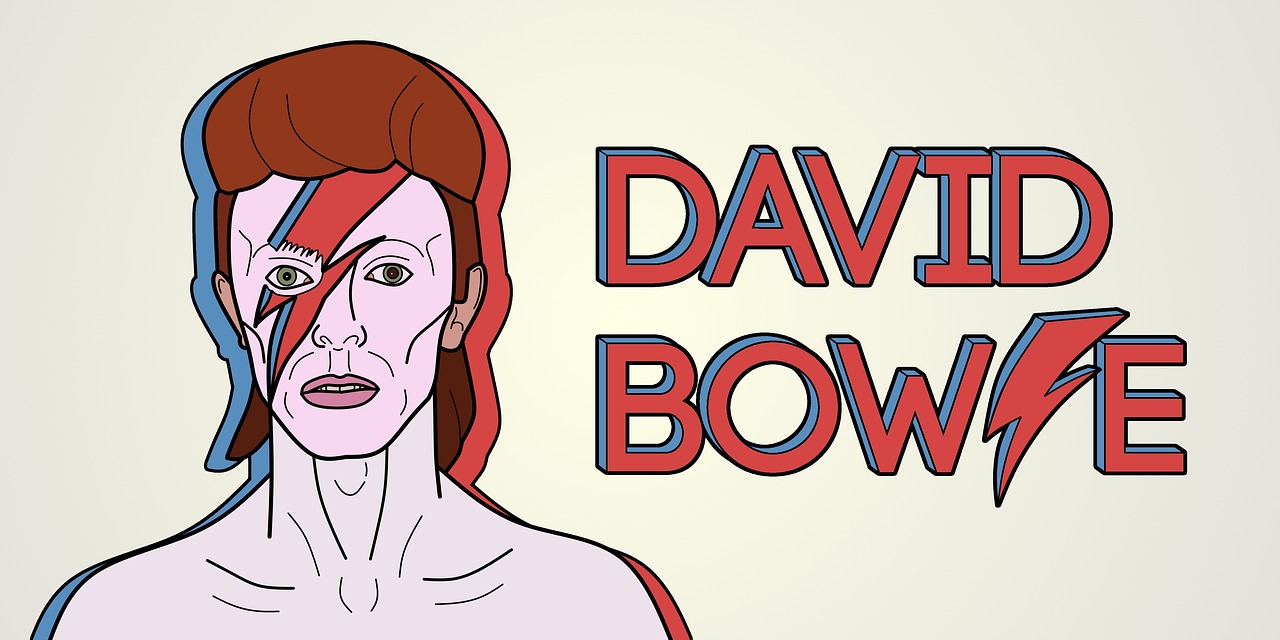
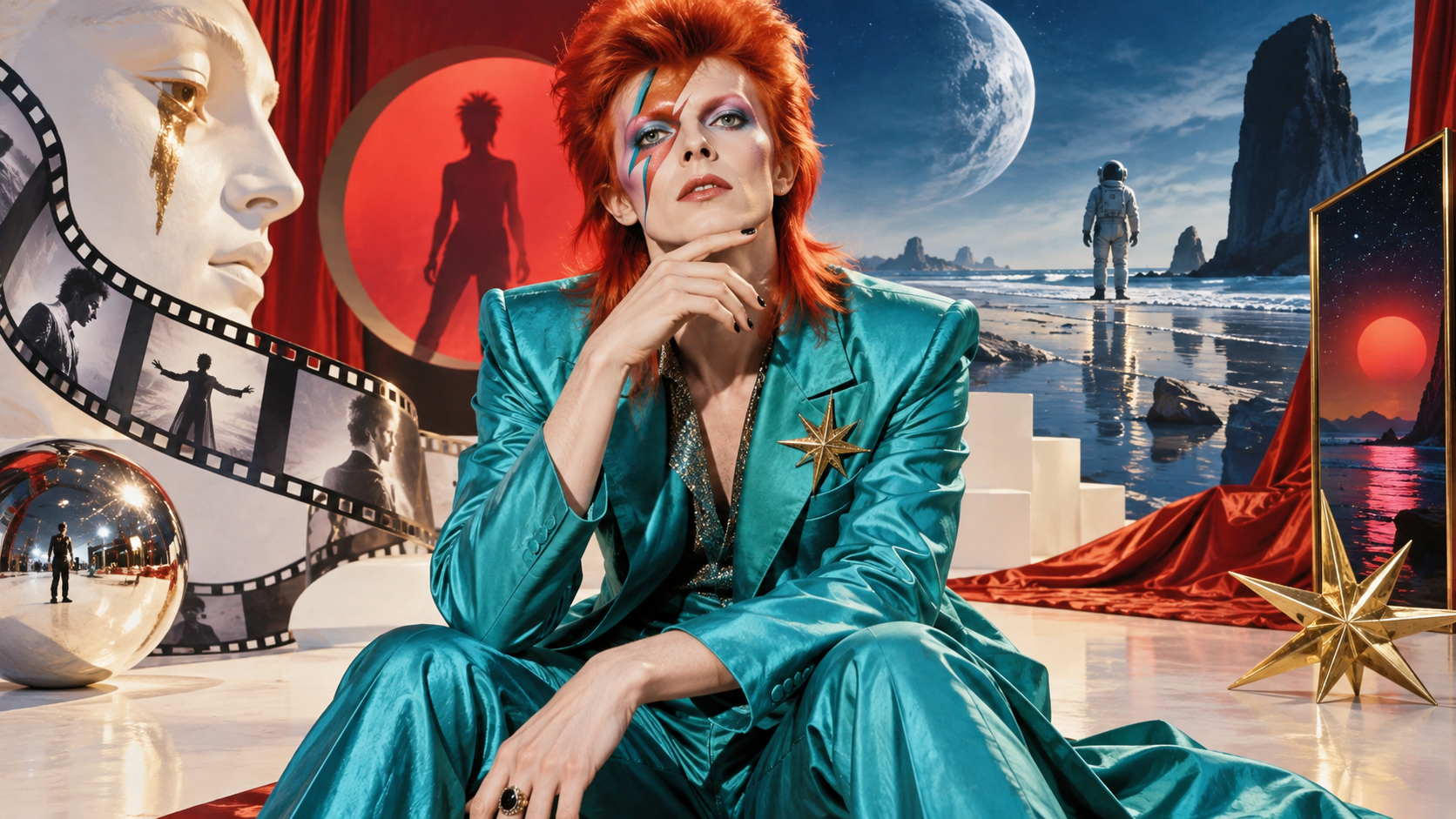
His most famous character was Ziggy Stardust, the glamorous alien rock star introduced during the early 1970s. Ziggy had bright red hair, dramatic makeup, unusual clothing, and an otherworldly presence. Bowie’s music videos and performances used these elements to make him appear less like an ordinary musician and more like a visitor from another world.

Bowie’s characters were not just costumes. They often represented specific themes. Ziggy Stardust explored fame, performance, sexuality, and the relationship between an artist and an audience. The Thin White Duke, another Bowie persona, presented a colder and more controlled image. Major Tom represented isolation, technology, and emotional distance.

By using different identities, Bowie made his videos feel like scenes from a larger story. Viewers were encouraged to ask who the character was, what the character represented, and how the character connected to the song.

In “Ashes to Ashes,” Bowie appeared as several different figures, including an astronaut, a clown-like Pierrot, and an inmate in a padded room. These images connected the song to his earlier Major Tom character while also suggesting confusion, emotional struggle, and personal change. The video did not offer one simple explanation. Instead, the changing characters reflected the song’s mysterious and fragmented mood.

This approach made Bowie’s videos visually interesting and emotionally complex. A viewer could enjoy the costumes and makeup at first, then notice the deeper symbolism after watching the video again.


He Used Fashion as a Storytelling Tool

Fashion played a central role in Bowie’s music videos. His clothing was often unusual, theatrical, and carefully chosen to communicate something about the song.

Bowie used colorful suits, flowing garments, platform shoes, tailored jackets, space-inspired outfits, and exaggerated accessories. These clothes helped him create a visual identity that audiences could recognize immediately. They also made his videos feel closer to theater or fashion photography than to traditional concert footage.

For “Life on Mars?”, Bowie wore a distinctive turquoise suit against a plain white background. The suit immediately attracted attention because of its bright color and clean shape. His heavy makeup added to the dramatic effect. The simple setting placed all the focus on Bowie’s face, clothing, and performance.

The video was directed and filmed by photographer Mick Rock, who had previously worked with Bowie on other promotional films. Bowie’s turquoise suit and makeup became central visual features because they transformed a relatively simple studio performance into a highly recognizable image.

The white background also mattered. It removed distractions and made Bowie appear almost like a painted figure or fashion model. The contrast between the plain background and the vivid suit created a clean, memorable composition.

Bowie’s fashion choices also helped challenge traditional ideas about masculinity. He wore makeup, bold colors, unusual silhouettes, and clothing that did not fit neatly into conventional categories. His style made personal identity appear flexible and creative.

This was especially important during a period when rock musicians were often expected to project a tough, traditionally masculine image. Bowie instead showed that an artist could use fashion to perform identity and question social expectations.

His clothing also made his videos easy to remember. A strong visual detail, such as a turquoise suit or a Pierrot costume, can stay in the audience’s mind long after the song ends.


He Made Makeup Part of the Message

Makeup was another major part of Bowie’s visual language. He used cosmetics not simply to look glamorous but to create a character, change his appearance, and communicate emotion.

During the Ziggy Stardust era, Bowie used bright colors, sharp lines, pale skin, and dramatic eye makeup. His appearance made him look both human and alien. The makeup suggested that his identity was deliberately constructed, much like a stage performance.

For the “Life on Mars?” video, Bowie wore heavy makeup created by Pierre LaRoche. Together with the turquoise suit, the makeup gave his face a bold, almost illustrated quality.

The result was not a naturalistic performance. Bowie looked like a figure from a painting, a fashion magazine, or a surreal stage production. This helped match the song’s dreamlike atmosphere.

In later videos, the makeup became darker or more theatrical. The Pierrot appearance in “Ashes to Ashes” used white face makeup and a pointed costume to create a sad, exaggerated clown-like figure. Pierrot traditionally suggests loneliness, innocence, and emotional vulnerability. Bowie used that visual association to add another layer to the song.

His makeup often blurred the boundary between performer and character. The audience was not always meant to see Bowie as himself. Instead, viewers saw a figure shaped by color, costume, lighting, and performance.


He Used Color to Create Mood

Color was one of Bowie’s most effective visual tools. He understood that colors could influence how viewers felt before they understood the meaning of the lyrics.

Bright colors often appeared in his glamorous or energetic videos. Turquoise, red, gold, orange, and electric blue created a sense of excitement and artificial beauty. These colors matched the theatrical nature of his music and helped establish the atmosphere of each era.

In “Life on Mars?”, the bright turquoise suit became the dominant color. The white background made the color appear even stronger. The combination created an image that felt clean, modern, and dreamlike.

“Ashes to Ashes” used color in a much more experimental way. The video featured solarized images, intense color changes, and unusual visual effects. Solarization can partially reverse or alter the normal appearance of tones and colors, creating an image that looks unnatural and otherworldly. The video also used a black sky effect and a highly manipulated color palette.

These effects made the world of the video seem unstable. The beach, costumes, and characters did not look entirely real. They appeared to exist somewhere between a dream, a memory, and a television fantasy.

The contrast between saturated color and black-and-white imagery also created emotional tension. Bright scenes could feel energetic but unsettling, while darker or monochrome scenes could appear more serious and isolated.

Bowie used color almost like a musical instrument. Just as a song can shift from a quiet verse to a powerful chorus, a video can change from soft colors to intense flashes. These visual shifts help guide the audience’s emotional response.


He Combined Reality With Surrealism

Many of Bowie’s music videos blend ordinary settings with strange or dreamlike images. This combination makes the videos feel familiar and unfamiliar at the same time.

A beach, studio, room, street, or stage may begin as an ordinary location. Bowie then changes its meaning through costumes, editing, lighting, props, or visual effects.

In “Ashes to Ashes,” the beach setting appears open and natural, but the characters and imagery make it feel like another world. Bowie’s Pierrot costume, the black sky, religious-looking figures, and unusual machinery create a scene that does not follow normal reality.

The video also includes images related to Major Tom, including a space suit and a padded room. These images connect different parts of Bowie’s creative history while making the story feel fragmented. Rather than presenting a straightforward plot, the video moves through a series of symbolic moments.

This non-linear approach was unusual compared with simple performance videos. Instead of showing one event from beginning to end, Bowie presented a collection of images that viewers had to interpret.

The result was similar to a dream. Dreams often combine unrelated people, places, and memories. Bowie used that structure to express uncertainty and emotional complexity.

His surrealism was also playful. The imagery could be strange without becoming completely inaccessible. Viewers could enjoy the unusual costumes and colorful scenes even if they did not identify every reference.


He Treated the Camera as Part of the Performance

Bowie’s performance style was closely connected to the camera. He rarely behaved as though he were simply recording a live concert. He used facial expressions, controlled movements, eye contact, and poses to create a direct relationship with the viewer.

In “Life on Mars?”, the camera stays focused on Bowie’s upper body and face. His performance is restrained but dramatic. He looks directly at the audience, allowing his makeup, expression, and clothing to carry much of the visual impact.

This close focus creates a sense of intimacy. Although the setting is simple, Bowie’s face becomes the main visual event. Small changes in expression feel important because there are few other elements competing for attention.

In other videos, Bowie uses more physical movement. He may walk, turn, gesture, or perform with theatrical exaggeration. These movements make him appear like an actor playing a role rather than a singer simply delivering a song.

His camera awareness also helped reinforce his control over his image. He understood that every gesture could become part of the character. A glance, a pose, or a change in posture could communicate confidence, sadness, danger, or mystery.

This careful performance style influenced later music videos, especially those created for artists who wanted to build a strong visual identity around their music.


He Used Lighting to Shape His Identity

Lighting helped Bowie control the mood and appearance of his videos. It could make him look glamorous, mysterious, vulnerable, artificial, or threatening.

Bright, even lighting made his makeup and clothing easy to see. This technique worked especially well in “Life on Mars?”, where the white background and strong studio lighting created a clean, almost photographic appearance.

More dramatic lighting created shadows and contrast. Darker scenes could make Bowie look isolated or mysterious, while strong highlights could emphasize the theatrical quality of his face.

Bowie’s videos often used lighting that felt intentionally artificial. This was appropriate because his characters were not meant to appear completely natural. They belonged to a world of performance, celebrity, fantasy, and transformation.

In “Ashes to Ashes,” the manipulated colors and surreal lighting make the characters appear almost unreal. The lighting does not merely illuminate the scene; it changes the scene’s emotional meaning.

A brightly lit figure may seem exposed, while a shadowed figure may appear secretive. A white costume may suggest innocence in one context and emotional emptiness in another.

By controlling the light, Bowie helped viewers understand how to feel about a character without explaining everything through words.


He Used Editing to Create Meaning

Bowie’s music videos often relied on fast cuts, sudden changes, repeated images, and unexpected transitions. Editing helped him create rhythm and emotional movement.

Instead of following a simple narrative, the images may appear in a sequence based on association. One image leads to another because of a shared color, shape, character, or idea rather than because of a traditional plot.

This technique is especially visible in “Ashes to Ashes.” The video moves between Bowie’s different characters, unusual locations, color treatments, and visual effects. The rapid changes mirror the song’s shifting emotional tone.

The editing can feel playful, confusing, or unsettling. That uncertainty is part of the point. The viewer is not given a complete answer but is invited to connect the images personally.

Visual editing also allowed Bowie to connect different periods of his career. References to Major Tom linked “Ashes to Ashes” with “Space Oddity,” but the new video presented the character in a very different emotional and visual context.

The earlier space hero had become a troubled and ambiguous figure. Through editing and repetition, Bowie transformed an old character into a symbol of personal history and change.

This is one reason his videos rewarded repeated viewing. The first viewing might make an impression through color and costume. Later viewings could reveal connections between images and songs.


He Used Props and Locations Symbolically

Props and locations in Bowie’s videos often had meaning beyond their practical purpose. They helped create a world around the song and gave the audience visual clues.

In “Ashes to Ashes,” the beach is not simply a place where the video was filmed. It becomes a strange, symbolic landscape. The open space suggests freedom, but the unusual figures and dark visual treatment make it feel emotionally heavy.

The video also features a bulldozer and scenes connected to a padded room and an exploding kitchen. These images make the video feel like a collection of memories, references, and fragments. They add to the sense that the song is examining the past while refusing to present it in a simple way.

The padded room suggests confinement and mental distress. The space imagery recalls Major Tom. The group of followers creates a ceremonial or religious atmosphere. Together, these elements form a visual story about isolation, identity, fame, and self-invention.

Bowie often selected locations that created contrast. A glamorous character might appear in a plain studio. A futuristic figure might appear in an ordinary environment. A theatrical costume might be placed against a natural landscape.

These contrasts made the visuals more memorable because they created visual tension. The audience sees two things that do not seem to belong together, then begins to wonder why they have been combined.


He Connected Music Videos With Film and Theater

Bowie’s music videos borrowed ideas from cinema, theater, fashion photography, painting, and performance art. This mixture helped make them feel richer than straightforward promotional clips.

His use of characters and costumes came from theater. His framing and styling often resembled fashion photography. His strange editing and symbolic images echoed experimental film.

This cross-disciplinary approach matched Bowie’s broader creative interests. He was not limited to one artistic field. He acted in films, performed on stage, worked with photographers, and collaborated with designers and directors.

Because of this background, he understood how visual storytelling worked. He knew that a character could be communicated through costume, that a location could suggest emotion, and that editing could create an impression without explaining every detail.

His videos also understood the power of a single memorable image. A music video does not need to tell a complete story to be effective. Sometimes one strong visual idea is enough to make a song unforgettable.

The image of Bowie in a turquoise suit, the Pierrot figure on the beach, and the dramatic makeup of the Ziggy era all became closely connected to the music. These visuals helped audiences remember the songs and the artist.


He Challenged Traditional Ideas About Identity

Bowie’s visual work often questioned the idea that identity must remain fixed. He changed his appearance, voice, clothing, behavior, and character from one era to another.

His music videos presented identity as something that could be performed, redesigned, and explored. This was one of the reasons his work connected with audiences who felt different or restricted by traditional expectations.

Bowie could appear masculine and feminine, human and alien, glamorous and damaged, confident and vulnerable. These combinations made his characters difficult to classify.

His visual choices encouraged viewers to think differently about gender, sexuality, celebrity, and self-expression. Rather than presenting one permanent image of himself, Bowie showed that people could contain many sides.

This idea was especially powerful because music videos reached audiences through television and later through home video and online platforms. His unusual appearance entered popular culture and gave viewers a new kind of role model.

He also showed that reinvention could be an artistic strength. Changing one’s appearance did not mean losing authenticity. For Bowie, transformation was part of the creative process.


He Made Videos That Matched the Music’s Emotion

Although Bowie’s videos were visually ambitious, the images were usually connected to the emotional character of the song.

A romantic or dreamlike song could receive elegant styling and controlled camera work. A tense or unsettling song might use sharp editing, strange angles, or distorted colors.

The video for “Life on Mars?” feels theatrical and emotionally focused. Bowie’s direct performance, bright suit, makeup, and plain backdrop keep attention on the song’s dramatic delivery.

“Ashes to Ashes,” by contrast, feels fragmented and psychologically complicated. Its unusual visual effects, multiple characters, and non-linear structure match the song’s themes of memory and uncertainty.

This connection between sound and image is important. A video should not merely add random decoration. The strongest visual elements reinforce the mood, message, or personality of the music.

Bowie understood this balance. Even when his imagery was unusual, it generally felt connected to the song’s atmosphere.


His Visual Style Influenced Later Artists

Bowie helped establish the music video as an important part of an artist’s identity. He showed that a video could introduce a character, create a visual world, and become as memorable as the song itself.

Later artists adopted similar approaches by using costumes, choreography, makeup, symbolic locations, and cinematic storytelling. Many performers also began treating music videos as major creative projects rather than simple recordings of a performance.

Bowie’s influence can be seen in artists who regularly reinvent their image or build complete visual eras around albums. His work helped make it normal for musicians to use fashion, design, and performance art as part of their musical presentation.

He also demonstrated the value of consistency. A strong visual idea can support an album, a tour, promotional photography, and live performances. Bowie’s characters often appeared across several forms of media, creating a unified creative identity.

At the same time, he avoided repeating himself too closely. Each era introduced something different. The visuals changed because the music and artistic goals changed.


Why David Bowie’s Music Videos Still Matter

David Bowie’s music videos remain important because they combine entertainment with artistic exploration. They are colorful, theatrical, strange, and often open to multiple interpretations.

He used visual elements to answer several questions at once:

  • Who is this character?
  • What does the character represent?
  • How does the clothing shape the audience’s impression?
  • What emotions are created by the color and lighting?
  • Why has this location or object been included?
  • How does the editing change the meaning of the song?

His videos did not always provide clear answers. Instead, they encouraged curiosity. A viewer could enjoy them as stylish performances, but also study them as visual stories.

Bowie’s greatest strength was his willingness to experiment. He did not treat music videos as secondary material. He used them to expand the meaning of his songs and create images that audiences could remember for decades.


David’s Visual Elements

David Bowie used visual elements in his music videos to build characters, express emotion, challenge social expectations, and turn songs into complete visual experiences. He combined theatrical costumes, dramatic makeup, bold color, unusual lighting, symbolic props, surreal locations, and experimental editing.

His approach made each video feel like more than a performance. It became a carefully designed world with its own mood, identity, and visual language.

“Life on Mars?” showed how a simple studio setting could become unforgettable through color, makeup, fashion, and direct performance. “Ashes to Ashes” demonstrated how surreal imagery, changing characters, visual effects, and fragmented editing could create a mysterious story connected to Bowie’s past.

By treating the camera, costume, and editing room as creative instruments, Bowie changed how musicians could present themselves. His music videos continue to stand out because they do not simply show the artist singing. They invite the audience into a world that is stylish, imaginative, and always slightly unexpected.
What Was the Impact of David Bowie’s “Ziggy Stardust” Persona?

Impact of David Bowie’s Ziggy Stardust Persona

When people talk about David Bowie, they don’t just talk about the songs. They talk about the characters, the looks, the way he seemed to come from another planet. And at the center of all that sits Ziggy Stardust, the red‑haired, makeup‑faced alien rock star who landed in 1972 and changed music, fashion, and pop culture in one bright, bizarre flash.

So what exactly was the impact of David Bowie’s Ziggy Stardust persona? In short: Ziggy shook the idea of what a rock star could look like, how they could behave, and even who their audience might be. It pushed gender lines, upgraded the importance of image, and helped invent what we now think of as “performance art” in pop music.

Below, we’ll break down how Ziggy Stardust changed music, how it reshaped gender and identity in pop culture, and why people still care about a fictional alien rock star more than 50 years later.


How Ziggy Stardust Changed Music and Performance

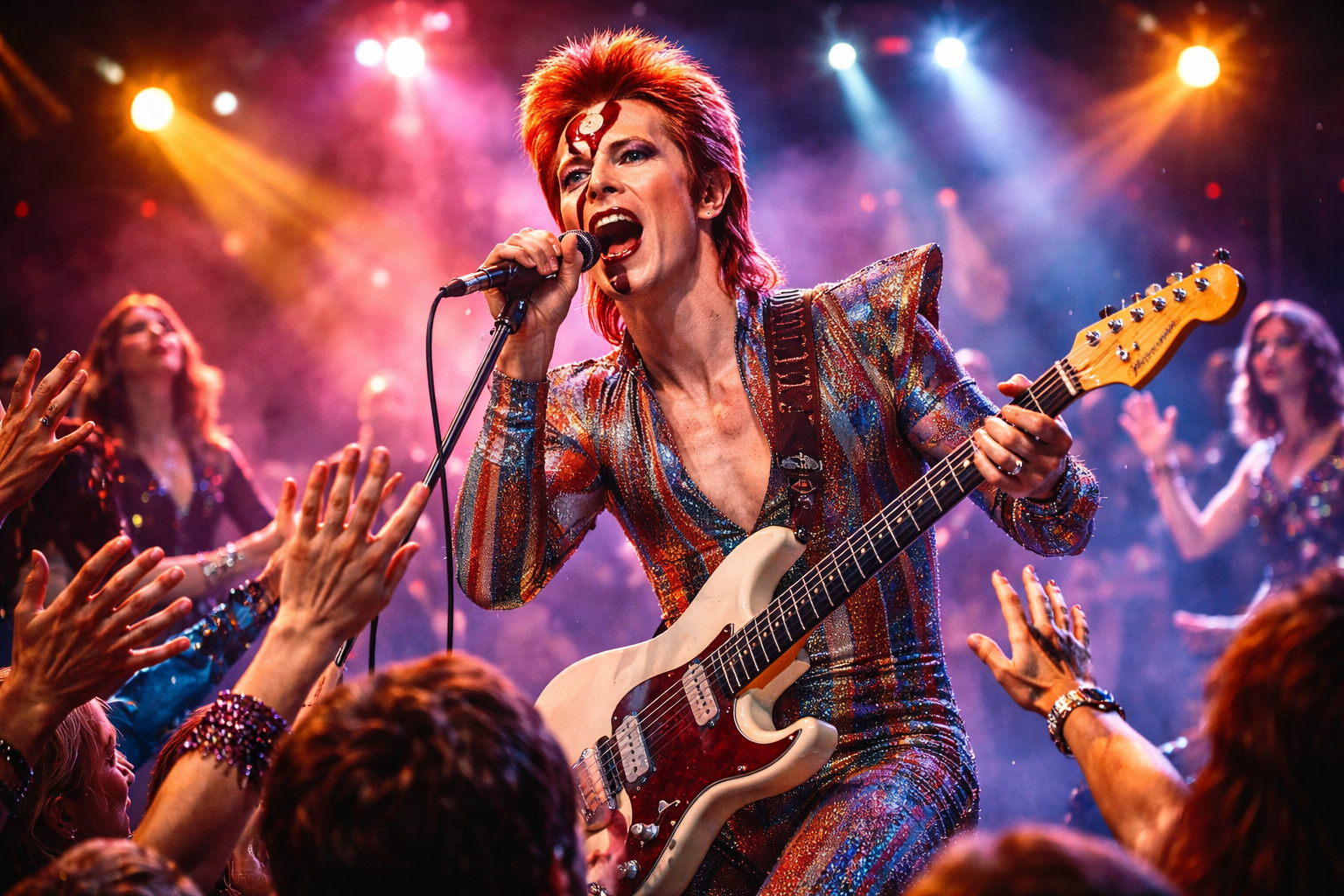
Before Ziggy, rock stars were mostly “real” guys in jeans and leather. They might dress up a bit, but the image was usually just background to the music. Bowie flipped that. With Ziggy Stardust he turned the whole show into the point: the red hair, the lightning‑bolt face paint, the tight suits, the space‑rock story, the way he sang as Ziggy rather than just as himself.

Ziggy was the star of a mini rock opera: an alien messenger sent to Earth in the last five years of the planet’s life, trying to bring a message of hope while slowly getting corrupted by fame and sex. This kind of storytelling—where character, costume, vocals, and album all fit together—wasn’t new, but it hadn’t been done in such a campy, theatrical, pop‑accessible way. Ziggy made rock feel like a space‑age musical you could dance to, not just a jukebox.

Musically, Ziggy Stardust blended glam rock, hard rock, and art‑rock into something catchy but still weird. Songs like “Starman,” “Suffragette City,” and “Ziggy Stardust” pulled in young fans who wanted something flashier than classic rock and more rock‑based than pure pop. The result was that Bowie didn’t just get a new sound; he created a new template for how albums could tell a story and still climb the charts.

Live shows became part of the myth, too. Bowie’s Ziggy tours in the early seventies were wild. The stage, the lights, the Spiders from Mars, the way he spaced‑walked across the stage—it all felt like a futuristic theater piece first, and a concert second. That raised the bar for other artists, who realized that if they wanted to stand out, they couldn’t just play well; they had to perform well.

Artists that came after Ziggy—everyone from Queen and the Rolling Stones to Eurythmics, Lady Gaga, and even parts of Kanye West’s persona—took notes on how Bowie used character, costume, and irony to keep his audience guessing. In other words, Ziggy didn’t just influence glam rock; he helped teach pop music that theatricality and image are part of the music itself.


Shaking Up Gender, Sexuality, and Identity

Maybe Ziggy’s most powerful impact wasn’t about clothes or concerts, but about what people felt allowed to be. In the early 1970s, talking openly about being bisexual or experimenting with gender‑bending fashion was still risky in many places. Bowie didn’t just whisper about it; he sang it and wore it on stage.

Ziggy Stardust blurred the lines between male and female, “normal” and “weird,” human and alien. He wore makeup, androgynous suits, and openly flirted with both men and women in interviews and songs. For young listeners who felt different—too geeky, too artsy, too queer, too “out there”—Ziggy was a permission slip. He showed that being confusing, mixed‑up, or in-between could be cool, even iconic.

Bowie’s Ziggy persona also helped normalize conversations about sexuality in pop. When he told the music press he was bisexual, it was bold, but it fit into how fans already saw Ziggy: a figure who could love anyone, look like anything, and still be the hero. That didn’t fix discrimination, of course, but it did give a lot of people a sense that they weren’t alone, that rock and pop could belong to outsiders too.

For many fans, Ziggy wasn’t just a character; he was a role model. He modeled a kind of self‑invention: you don’t have to be born in one fixed box; you can build and rebuild your identity. That idea—“you can be whoever you want to be on stage and maybe off it too”—became a core part of modern pop culture.


Turning the Rock Star into a Character, Not Just a Person

Before Ziggy, most famous musicians were seen as “real” people who happened to be good at singing or playing instruments. Bowie upped the game by treating the rock star as a role, like in a play. Ziggy Stardust wasn’t just a nickname; he was a full‑on character with a backstory, a costume, and an arc: arrival, rise, corruption, and death.

This had a few big effects.

First, it made fans more critical. When Bowie announced in 1973 that the Ziggy Stardust show was “the last show that we’ll ever do,” he literally killed off Ziggy in front of the audience. That act made it clearer that rock stardom itself could be a kind of costume, that behind the image were decisions, strategies, and even exhaustion.

Second, it opened the door for other artists to create multiple personas. After Bowie, musicians didn’t have to stick to one “authentic” version of themselves for their whole careers. They could be chameleons, like Prince, Madonna, or Lady Gaga, each reinventing their image and story with every album cycle.

Third, it turned the idea of “authenticity” on its head. Ziggy was obviously fake, obviously theatrical, and yet felt emotionally real to listeners. That helped people see that being genuine doesn’t mean being totally “natural” or “simple.” It can mean being honest about wanting to transform, to play roles, and to experiment with who you are.


How Ziggy Stardust Influenced Fashion and Visual Culture

Ziggy’s impact wasn’t limited to albums and fan zines. It spilled over into fashion, magazines, TV, and even how people dressed at home. The bright colors, tight suits, platform boots, and wild makeup that Ziggy wore became part of the glam rock look and later rippled into punk, new wave, and electronic scenes.

Designers and stylists noticed that Bowie didn’t just pick outfits; he curated a whole aesthetic. His collaborations with designers and makeup artists helped establish the idea that a musician’s visual world—their hair, clothes, lighting, and stage sets—was just as important as the songs.

That focus on image as content also helped push music videos into the spotlight. Later, when MTV came along, artists already knew they needed to look memorable, not just sound good. Ziggy’s emphasis on visual storytelling stands behind the way many modern stars think in terms of “eras,” “looks,” and “campaigns,” not just singles and albums.


The Lasting Cultural Impact: Why Ziggy Still Matters

Decades after Ziggy Stardust burned out, people still listen to the album, still dress up as Ziggy for Halloween or cosplay, and still talk about him as a symbol of reinvention. Why? Part of it is that Ziggy captured a very specific feeling—being on the edge of something big, a little scared, a little excited, and ready to transform.

Ziggy’s story also works as a warning as much as a fantasy. In the album, Ziggy becomes addicted to fame and crowds, loses his message, and finally dies. That arc feels familiar in an age of social media, influencers, and viral fame, where attention can feel life‑giving and destructive at the same time.

More subtly, Ziggy helped normalize the idea that people can change. In a world where people are often told to “be themselves,” Ziggy says it’s okay to keep trying on new selves, to experiment, to fail, and to retire a look when it no longer fits. That message still resonates with anyone who has ever felt like they don’t fit in, or who wants to try on a bolder version of themselves, even if just for a night.


Ziggy Stardust as a Cultural Turning Point

David Bowie’s Ziggy Stardust persona didn’t just make him a superstar. It changed how music, fashion, and pop culture think about identity, performance, and image. Ziggy turned the rock star into a character, blurred the lines between male and female, and showed that being unusual could be a source of strength rather than shame.

It also helped teach future artists that a pop career doesn’t have to be one long, consistent “self.” It can be a series of experiments, personas, and visual worlds, each with its own story and mood. That idea is now everywhere in pop, but in the early 1970s, Ziggy Stardust was one of the first clear blueprints.

So when people ask what the impact of David Bowie’s Ziggy Stardust persona was, they’re really asking how a pretend alien rock star changed how we see ourselves, how we dress, and how we experience music. The answer is: more than most fictional characters ever do, Ziggy Stardust helped real people feel a little more free to be whoever they wanted to be.

How Did David Bowie’s Music Evolve Over Time?

David Bowie, an artist renowned for his ever-evolving musical persona, embarked on a remarkable and chameleon-like journey through the world of music. Over the span of several decades, his music underwent a series of transformations that reflected his personal growth, artistic experimentation, and a rapidly changing music landscape. In this article, we will delve into the evolution of David Bowie’s music over time, tracing the various phases and styles that defined his extraordinary career.

The Mod and Rock ‘n’ Roll Influences (1960s):
David Bowie’s musical journey began in the 1960s, a time when he was deeply influenced by mod culture and early rock ‘n’ roll. His debut single, “Liza Jane” (1964), released under the name Davie Jones with the King Bees, showcased his initial foray into music. During this period, he explored rock ‘n’ roll with his self-titled debut album, “David Bowie” (1967), and songs like “Can’t Help Thinking About Me.” These early works provided a glimpse of his budding talent and the influences that would shape his future.

Folk and Psychedelic Rock (Late 1960s – Early 1970s):
As the 1960s gave way to the early 1970s, Bowie’s music shifted towards folk and psychedelic rock. Albums like “Space Oddity” (1969) and “The Man Who Sold the World” (1970) delved into these genres, with the iconic “Space Oddity” single serving as a notable example. These albums showcased Bowie’s versatility and his ability to experiment with different musical styles.

The Rise of Ziggy Stardust and Glam Rock (Early 1970s):
One of the most defining moments in Bowie’s career came with the advent of glam rock. His creation of the Ziggy Stardust persona marked a turning point. The album “The Rise and Fall of Ziggy Stardust and the Spiders from Mars” (1972) catapulted him to international stardom. Glam rock was characterized by its extravagant fashion, theatrical performances, and bold, anthemic music. Bowie’s Ziggy Stardust era became synonymous with glam rock, with iconic tracks like “Starman” and “Suffragette City” epitomizing the genre.

Soul and R&B (Mid-1970s):
In the mid-1970s, Bowie explored soul and R&B music, heavily influenced by the American soul sound. His album “Young Americans” (1975) marked a significant departure from glam rock. Songs like the title track “Young Americans” and the chart-topping hit “Fame” showcased his rich baritone vocals and the incorporation of funk and soul rhythms. This transition demonstrated his remarkable adaptability.

Funk and Disco (Mid-1970s):
Bowie’s exploration of funk and disco continued with his 1976 album “Station to Station.” This album marked a transition from soul to a more electronic and funk-oriented sound. The title track, “Station to Station,” and “Golden Years” exemplified his foray into these genres. Bowie’s collaboration with musicians like Carlos Alomar and Luther Vandross contributed to the album’s distinctive sound.

Electronic and Experimental Music (Late 1970s):
The late 1970s saw Bowie pushing the boundaries of music even further. Albums like “Low” (1977), “Heroes” (1977), and “Lodger” (1979), collectively known as the “Berlin Trilogy,” showcased his experimentation with electronic and ambient music. Collaborating with Brian Eno, Bowie created innovative and instrumental-driven compositions that challenged conventional song structures. These albums were marked by their atmospheric and avant-garde soundscapes.

New Wave and Post-Punk (Late 1970s – Early 1980s):
Bowie’s influence on the New Wave and post-punk movements of the late ’70s and early ’80s was substantial. His Berlin Trilogy and the subsequent albums “Scary Monsters (And Super Creeps)” (1980) and “Let’s Dance” (1983) incorporated elements of these genres. The track “Ashes to Ashes” from “Scary Monsters” is often considered a pioneering post-punk song, and Bowie’s continued experimentation resonated with the evolving musical landscape.

Pop and Dance Music (Early 1980s):
In the early 1980s, Bowie embraced pop and dance music, which resulted in his commercially successful album “Let’s Dance” (1983). The title track, “Modern Love,” and “China Girl” tapped into the vibrant, consumer-driven culture of the time. Bowie’s music during this period was infectious and celebrated the exuberance of the decade, even as it explored themes of love and relationships.

Industrial and Alternative Rock (1990s):
Bowie’s willingness to adapt and experiment continued in the 1990s. Albums like “Outside” (1995) and “Earthling” (1997) explored industrial and alternative rock territory. Bowie’s collaboration with artists like Trent Reznor of Nine Inch Nails demonstrated his embrace of the industrial sound, and these albums resonated with a new generation of listeners.

Nostalgia and Reflection (2000s):
As the new millennium began, Bowie’s music turned introspective. His album “Heathen” (2002) featured reflective songs like “Sunday” and “Slip Away.” Bowie’s introspection and nostalgic undertones resonated with a generation that was beginning to grapple with the passage of time and its impact on identity.

Experimental and Art Rock (2010s):
Bowie’s final albums, “The Next Day” (2013) and “Blackstar” (2016), featured a return to more experimental and art rock elements. These albums showcased his enduring creativity and ability to blend various styles into a coherent and innovative sound. “Blackstar” was particularly significant, given its release shortly before his passing in 2016. The album’s avant-garde jazz-infused sound and poignant lyrics addressed themes of mortality and transcendence.

David Bowie’s remarkable musical evolution reflected his innate ability to adapt and experiment with different styles. From his early rock ‘n’ roll influences and the glam rock extravagance of Ziggy Stardust to his exploration of soul, funk, disco, and electronic music, Bowie’s career was a dynamic exploration of the ever-changing musical landscape. His willingness to challenge conventions and his continuous artistic reinvention solidified his status as an icon of musical innovation and evolution. David Bowie’s legacy is not only one of timeless music but also a testament to the enduring spirit of creative exploration in the world of music.

How Did David Bowie’s Music Reflect Societal Changes?

David Bowie, the legendary musician and cultural icon, was not only a master of musical innovation but also a mirror to the societal changes of his time. Throughout his prolific career spanning several decades, Bowie’s music often reflected and responded to the shifting cultural, political, and social landscapes of the eras in which he lived and worked. In this article, we will explore how David Bowie’s music served as a reflection of societal changes, offering a unique lens through which to view the evolving world around him.

The 1960s: The Birth of Bowie:
David Bowie’s early career coincided with the tumultuous 1960s, a decade characterized by significant social and cultural upheaval. In the midst of the counterculture movement, Bowie emerged as a young artist eager to challenge norms and conventions. His 1969 single “Space Oddity” not only catapulted him to fame but also captured the sense of space exploration and technological optimism that defined the era. The song’s release coincided with the Apollo 11 moon landing, making it particularly resonant with the zeitgeist of the time.

Glam Rock and Gender Identity:
The early 1970s saw the rise of glam rock, and Bowie, with his Ziggy Stardust persona, became one of its leading figures. Glam rock was a subculture that embraced flamboyant fashion, androgyny, and theatrical performances. Bowie’s adoption of Ziggy Stardust allowed him to explore issues of gender identity and sexual fluidity, topics that were rarely discussed openly at the time. Through Ziggy, Bowie challenged traditional notions of masculinity and femininity, providing a platform for discussions on identity and self-expression.

The 1970s: Reflections on Alienation and Identity:
Bowie’s 1970s albums, such as “Hunky Dory,” “The Rise and Fall of Ziggy Stardust and the Spiders from Mars,” and “Diamond Dogs,” delved into themes of alienation, identity, and societal disintegration. Songs like “Changes” and “Rock ‘n’ Roll Suicide” resonated with a generation grappling with cultural shifts and a sense of displacement. Bowie’s music offered a voice to those seeking to define themselves in a rapidly changing world.

The 1980s: Globalization and Individualism:
As the 1980s dawned, Bowie’s music continued to evolve, reflecting the growing influence of globalization and a burgeoning sense of individualism. His album “Scary Monsters (And Super Creeps)” (1980) featured the hit single “Ashes to Ashes,” which touched upon themes of personal reflection and the impact of fame. The music video for “Ashes to Ashes” was a surreal and iconic visual representation of the era’s technological advances.

The 1980s: Dance, Pop, and Consumer Culture:
In the early 1980s, Bowie embraced dance and pop music with his album “Let’s Dance” (1983). The title track and other songs from the album, such as “Modern Love” and “China Girl,” tapped into the vibrant, consumer-driven culture of the time. Bowie’s music during this period was infectious and celebrated the exuberance of the decade, even as it explored themes of love and relationships.

The 1990s: Postmodernism and Identity Politics:
Bowie’s music in the 1990s reflected the postmodernist sensibilities of the era. His album “Outside” (1995) featured an intricate narrative and characters that delved into themes of art, identity, and surveillance. It was a reflection of a world grappling with identity politics, the blurring of reality and fiction, and the proliferation of information in the digital age.

The 2000s: Nostalgia and Reflection:
As the new millennium began, Bowie’s music turned introspective. His album “Heathen” (2002) featured reflective songs like “Sunday” and “Slip Away.” Bowie’s introspection and nostalgic undertones resonated with a generation that was beginning to grapple with the passage of time and its impact on identity.

The 2010s: Farewell and Legacy:
Bowie’s final album, “Blackstar” (2016), released shortly before his death, was a haunting and experimental work that delved into themes of mortality and transcendence. Bowie’s passing in 2016 marked the end of an era, but his music and artistic legacy continue to influence subsequent generations of musicians and artists.

David Bowie’s music served as a powerful reflection of the societal changes and cultural shifts that defined the decades in which he lived and worked. From the counterculture movements of the 1960s to the gender identity explorations of the 1970s, from the individualism and consumerism of the 1980s to the postmodernist complexities of the 1990s, Bowie’s music was a dynamic and ever-evolving commentary on the world around him. His ability to adapt, innovate, and engage with the issues of his time solidified his status as a musical and cultural icon, leaving an indelible mark on the history of music and society.

What Were David Bowie’s Major Music Genres?

David Bowie, the iconic and chameleon-like artist, was renowned for his ability to seamlessly transition between various musical genres throughout his illustrious career. His versatility and willingness to experiment with different styles made him one of the most influential musicians of the 20th century. In this article, we will explore the major music genres that David Bowie explored and mastered during his extraordinary journey in the world of music.

Rock and Roll:
David Bowie’s early musical influences were deeply rooted in rock and roll. His fascination with American rock pioneers like Elvis Presley, Little Richard, and Chuck Berry had a profound impact on his music. Bowie’s early singles and albums, such as “Space Oddity” (1969) and his self-titled debut album “David Bowie” (1967), showcased his affinity for rock and roll, and his charismatic stage presence was already evident.

Folk and Psychedelic Rock:
During the late 1960s and early 1970s, Bowie delved into folk and psychedelic rock, embracing the counterculture movements of the era. Albums like “Space Oddity” and “The Man Who Sold the World” (1970) featured folk and psychedelic elements, with songs like “Memory of a Free Festival” and “All the Madmen” displaying his experimentation with these genres.

Glam Rock:
Perhaps one of the most defining moments in Bowie’s career was the advent of glam rock. His creation of the Ziggy Stardust persona and the release of “The Rise and Fall of Ziggy Stardust and the Spiders from Mars” (1972) catapulted him to international stardom. Glam rock was characterized by its extravagant fashion, theatrical performances, androgynous style, and androgynous style, and bold, anthemic music. Bowie’s Ziggy Stardust era became synonymous with glam rock, with iconic tracks like “Starman” and “Suffragette City” embodying the genre’s spirit.

Soul and R&B:
In the mid-1970s, David Bowie ventured into soul and R&B music, heavily influenced by the American soul sound. His album “Young Americans” (1975) epitomized this genre shift, featuring songs like the title track “Young Americans” and the chart-topping hit “Fame.” Bowie’s rich baritone vocals and the incorporation of funk and soul rhythms marked a significant departure from his glam rock persona.

Funk and Disco:
Bowie’s exploration of funk and disco continued with his 1976 album “Station to Station.” This album marked a transition from soul to a more electronic and funk-oriented sound. The title track, “Station to Station,” and “Golden Years” exemplify Bowie’s foray into these genres. His collaboration with musicians like Carlos Alomar and Luther Vandross contributed to the album’s distinctive sound.

Electronic and Experimental Music:
The late 1970s saw Bowie pushing the boundaries of music even further. Albums like “Low” (1977), “Heroes” (1977), and “Lodger” (1979), collectively known as the “Berlin Trilogy,” showcased his experimentation with electronic and ambient music. Collaborating with Brian Eno, Bowie created innovative and instrumental-driven compositions that challenged conventional song structures.

New Wave and Post-Punk:
Bowie’s influence on the New Wave and post-punk movements of the late ’70s and early ’80s was substantial. His Berlin Trilogy and the subsequent albums “Scary Monsters (And Super Creeps)” (1980) and “Let’s Dance” (1983) incorporated elements of these genres. The track “Ashes to Ashes” from “Scary Monsters” is often considered a pioneering post-punk song.

Pop and Dance Music:
In the 1980s, Bowie embraced pop and dance music, which resulted in his commercially successful album “Let’s Dance” (1983). The title track, “Modern Love,” and “China Girl” showcased his knack for crafting infectious pop hits that dominated the charts during the era. This period solidified Bowie’s status as a global pop icon.

Industrial and Alternative Rock:
Bowie’s willingness to adapt and experiment continued in the 1990s. Albums like “Outside” (1995) and “Earthling” (1997) explored industrial and alternative rock territory. Bowie’s collaboration with artists like Trent Reznor of Nine Inch Nails demonstrated his embrace of the industrial sound.

Experimental and Art Rock:
Bowie’s final albums, “Heathen” (2002), “Reality” (2003), and “The Next Day” (2013), featured a return to more experimental and art rock elements. These albums showcased his enduring creativity and ability to blend various styles into a coherent and innovative sound.

Jazz:
Bowie’s fascination with jazz music was apparent in his 2016 album “Blackstar,” released shortly before his death. This avant-garde jazz-infused album was a departure from his previous work and was met with critical acclaim. It demonstrated Bowie’s unwavering commitment to artistic exploration.

David Bowie’s ability to traverse a wide array of music genres and adapt to evolving musical landscapes is a testament to his status as a musical visionary. From rock and roll to glam rock, soul, funk, disco, electronic, and beyond, Bowie’s career spanned decades of musical experimentation. His impact on the music industry and his ability to inspire subsequent generations of artists showcase his enduring legacy as an artist who fearlessly embraced change and innovation. Bowie’s chameleon-like nature will forever be celebrated as a hallmark of his remarkable musical journey.

Who Has David Bowie Influenced?

David Bowie, an iconic figure in the world of music and culture, left an indelible mark on the music industry that extended far beyond his own era. His innovative approach to music, fashion, and art made him not only a legendary artist but also a trailblazer whose influence has reverberated across generations and genres. In this article, we will explore the profound impact that David Bowie has had on various artists and artistic movements.

Pop and Rock Music:

David Bowie’s influence on the pop and rock music landscape is immeasurable. His ability to reinvent himself and experiment with different musical styles set a precedent for countless musicians who followed in his footsteps. Notable artists influenced by Bowie include:

Madonna: The Queen of Pop has openly acknowledged Bowie’s influence on her music, style, and persona. She admired his ability to constantly evolve and redefine himself, a trait she incorporated into her own career.

Prince: Prince, another music legend, was deeply inspired by Bowie’s genre-blurring approach. Bowie’s impact can be seen in Prince’s eclectic musical style and theatrical stage presence.

U2: The Irish rock band U2, led by Bono, found inspiration in Bowie’s willingness to experiment with sound and image. Bono has cited Bowie as a major influence on his own artistic journey.

Radiohead: The British rock band Radiohead’s exploration of unconventional song structures and themes draws parallels to Bowie’s innovative approach to music. Bowie’s influence on Radiohead is evident in their album “OK Computer.”

Glam Rock:

As one of the pioneers of glam rock, David Bowie played a pivotal role in shaping the genre. Glam rock, characterized by its extravagant fashion and theatrical performances, has left a lasting impact on music and fashion. Bowie’s influence on glam rock can be seen in:

T. Rex: Marc Bolan and T. Rex, known for hits like “Bang a Gong (Get It On),” embraced the glam rock aesthetic. Bowie’s Ziggy Stardust persona and glittery glam style influenced Bolan’s own fashion choices.

Roxy Music: The British art rock band Roxy Music, led by Bryan Ferry, incorporated elements of glam rock into their music and image. Bowie’s influence is evident in their early albums.

Lou Reed: Although not a glam rocker, Lou Reed of The Velvet Underground collaborated with Bowie on the album “Transformer.” Bowie’s production work on this album helped shape Reed’s sound and introduced him to a wider audience.

New Wave and Post-Punk:

The New Wave and post-punk movements of the late ’70s and early ’80s were influenced by David Bowie’s boundary-pushing music and aesthetics. Artists in these genres drew inspiration from Bowie’s artistic reinventions, androgynous style, and experimentation:

Blondie: Debbie Harry and Blondie embraced the New Wave movement and experimented with pop, punk, and new wave influences. Bowie’s chameleon-like approach to music and fashion influenced Harry’s eclectic style.

Siouxsie and the Banshees: Siouxsie Sioux, known for her influential work in the post-punk and gothic rock genres, admired Bowie’s ability to merge different musical elements. His impact is evident in the band’s music and style.

The Cure: Robert Smith of The Cure found inspiration in Bowie’s ability to evolve and explore new musical directions. Bowie’s impact can be heard in The Cure’s evolving sound over the years.

Electronic and Synthpop:

Bowie’s foray into electronic and synthpop music during the late ’70s and early ’80s laid the groundwork for the electronic music revolution. Artists in the electronic music scene, as well as synthpop pioneers, were influenced by Bowie’s experimentation:

Depeche Mode: The influential synthpop band Depeche Mode found inspiration in Bowie’s exploration of electronic music on albums like “Low” and “Heroes.” His influence is particularly evident in their early work.

Nine Inch Nails: Trent Reznor, the mastermind behind Nine Inch Nails, was influenced by Bowie’s fusion of rock and electronic elements. Bowie’s collaboration with Reznor on the album “Outside” showcased their shared interest in experimental music.

Gary Numan: The synthpop pioneer Gary Numan incorporated elements of Bowie’s electronic experimentation into his own music. Bowie’s influence is heard in Numan’s breakthrough hit “Cars.”

Alternative and Indie Rock:

Bowie’s influence extended to alternative and indie rock artists who appreciated his artistic integrity, genre-blurring, and lyrical depth:

Arcade Fire: The Canadian indie rock band Arcade Fire cited Bowie as a major influence on their music and live performances. Bowie’s impact can be seen in their theatrical and emotionally charged shows.

The Strokes: The New York City-based rock band The Strokes drew inspiration from Bowie’s innovative spirit and his willingness to challenge the status quo. Bowie’s influence can be heard in their garage rock sound.

MGMT: The psychedelic rock duo MGMT admired Bowie’s ability to seamlessly blend genres and experiment with electronic music. His influence is reflected in their eclectic and genre-defying music.

Visual Arts and Fashion:

Beyond music, David Bowie’s influence extended to the visual arts and fashion. His ever-changing personas and groundbreaking fashion choices inspired artists and designers:

Alexander McQueen: The renowned fashion designer Alexander McQueen was influenced by Bowie’s fearless approach to fashion. Bowie’s androgynous style and avant-garde outfits resonated with McQueen’s design philosophy.

Jean-Michel Basquiat: The iconic American artist Jean-Michel Basquiat collaborated with Bowie on the 1983 film “Basquiat.” Bowie’s support and involvement in the art world helped raise Basquiat’s profile.

Cindy Sherman: The celebrated photographer and artist Cindy Sherman explored themes of identity and transformation in her work, echoing Bowie’s own exploration of persona and self-reinvention.

LGBTQ+ Community:

David Bowie’s openness about his bisexuality and gender exploration during the ’70s and beyond resonated with the LGBTQ+ community. He became an icon for those challenging societal norms and embracing their true selves:

Boy George: The androgynous and gender-fluid style of Boy George, frontman of Culture Club, was influenced by Bowie’s boundary-pushing fashion choices and fearless self-expression.

RuPaul: The legendary drag queen and host of “RuPaul’s Drag Race” has praised Bowie as a trailblazer who inspired countless LGBTQ+ artists to embrace their identities and express themselves authentically.

Queer Artists: Bowie’s impact on LGBTQ+ artists extends to a wide range of musicians, visual artists, writers, and performers who have found inspiration in his willingness to challenge traditional gender roles and societal expectations.

David Bowie’s enduring influence transcends music genres and artistic disciplines. His fearless exploration of music, fashion, and identity continues to inspire generations of artists who admire his artistic integrity, creativity, and fearless reinvention. Whether through his groundbreaking albums, iconic stage personas, or genre-defying sound, Bowie’s legacy lives on in the work of those he has influenced, making him a timeless and enduring cultural icon.

What Was the Impact of David Bowie’s Album “Young Americans”?

David Bowie’s musical journey was marked by constant reinvention, pushing boundaries, and exploring new sonic territories. One pivotal album that showcased his ability to seamlessly transition between genres and adapt to changing musical landscapes was “Young Americans.” Released in 1975, this album marked a departure from Bowie’s glam rock phase and introduced a fusion of soul, funk, and R&B influences that left a lasting impact on both his career and the music industry as a whole.

At the time of its release, “Young Americans” was a departure from Bowie’s previous glam rock personas, such as Ziggy Stardust and the Thin White Duke. With this album, Bowie aimed to experiment with a more soulful and funk-oriented sound, drawing inspiration from the burgeoning disco and R&B scenes of the 1970s. The result was a musical evolution that showcased Bowie’s versatility as an artist and his willingness to challenge his own creative boundaries.

One of the defining features of “Young Americans” was its incorporation of American musical influences. Bowie, who had relocated to Los Angeles, embraced the sounds of American soul and R&B, collaborating with renowned musicians such as Luther Vandross and Carlos Alomar. The album’s title track, “Young Americans,” combined soulful vocals with a catchy melody, and its commentary on youth culture and social issues resonated with audiences. The track’s infectious energy and danceable rhythm propelled it to commercial success and established Bowie’s presence in the evolving music scene.

However, it was the song “Fame” that became a game-changer for both Bowie and the music industry. Co-written with John Lennon, “Fame” delved into the complexities of fame and the entertainment industry. Its distinctive guitar riff and irresistible groove not only became a chart-topping hit but also solidified Bowie’s status as a pioneering artist willing to challenge conventions. “Fame” not only became one of Bowie’s signature tracks but also served as a testament to his ability to adapt and collaborate with other influential artists.

“Across the Universe,” a cover of the Beatles classic, demonstrated Bowie’s mastery at reinterpreting existing songs and adding his unique touch. His rendition of the song showcased his vocal prowess and his capacity to infuse his distinct style into a familiar tune.

“Right” and “Somebody Up There Likes Me” further exemplified Bowie’s exploration of funk-infused arrangements and soulful vocals. These tracks, along with the album as a whole, captured the essence of the era’s musical landscape while simultaneously pushing the envelope and defying categorization.

The impact of “Young Americans” extended beyond its musical innovation; it also had a significant influence on fashion and style. Bowie’s image underwent a transformation to match the album’s new sound. He adopted a more sophisticated and elegant appearance, complete with tailored suits, floppy bow ties, and shoulder-length hair. This reinvention demonstrated his ability to not only reinvent his sound but also to curate a visual identity that complemented his musical evolution.

Critics and fans alike recognized the album’s importance in shaping Bowie’s legacy. “Young Americans” showcased his adaptability and willingness to experiment with new sounds, which set the stage for his later successes. While some purists were initially surprised by Bowie’s shift in musical direction, the album’s impact on subsequent generations of musicians was undeniable.

In hindsight, the album’s fusion of genres and its exploration of social themes are part of what made “Young Americans” a defining work in David Bowie’s extensive discography. It served as a bridge between different musical eras and showcased his ability to assimilate and reinterpret diverse influences. The album also marked a significant chapter in his artistic journey, showcasing his evolution as a musician who consistently defied expectations.

David Bowie’s album “Young Americans” left an indelible impact on the music industry and his career as an artist. By blending soul, funk, and R&B influences, Bowie demonstrated his ability to evolve creatively and tap into new musical landscapes. The album’s fusion of genres, highlighted by tracks like “Fame” and “Young Americans,” pushed artistic boundaries and established Bowie’s status as an influential figure in popular music. Beyond its musical contributions, “Young Americans” also influenced Bowie’s image and style, showcasing his multidimensional artistry that continues to inspire generations of musicians and fans.

Who Has David Bowie Influenced?

David Bowie is one of the most iconic and influential musicians of the 20th century, with a career spanning several decades and multiple genres. Over the course of his career, he inspired and influenced countless musicians and artists, both in his native England and around the world. Here are some of the artists who have been influenced by David Bowie:

Lady Gaga: Lady Gaga has frequently cited David Bowie as one of her biggest inspirations. She has spoken about his influence on her music, style, and persona, and has performed several of his songs in tribute to him. In 2016, she even performed a medley of Bowie’s hits at the Grammy Awards, wearing a costume inspired by his iconic Ziggy Stardust character.

Trent Reznor (Nine Inch Nails): Trent Reznor has spoken about the profound impact that David Bowie had on his music and artistry. He has cited Bowie as a major influence on his band Nine Inch Nails, and has covered several of his songs in concert. He also collaborated with Bowie on the song “I’m Afraid of Americans” in 1997.

Arcade Fire: The members of Arcade Fire have frequently cited David Bowie as an inspiration for their music and artistry. They have covered several of his songs in concert, and have spoken about the impact that he had on their approach to songwriting and performance.

Kanye West: Kanye West has cited David Bowie as one of his biggest inspirations, particularly in terms of his willingness to take creative risks and push boundaries. He has spoken about the influence that Bowie had on his album “Yeezus,” and has sampled his music in several of his songs.

Iggy Pop: Iggy Pop was a close friend and collaborator of David Bowie, and was heavily influenced by his music and artistry. The two artists worked together on several albums, including “The Idiot” and “Lust for Life,” and Bowie produced many of Iggy Pop’s early solo recordings.

Madonna: Madonna has frequently cited David Bowie as an influence on her music and style. She has covered several of his songs in concert, and has spoken about his impact on her approach to performance and image-making.

Radiohead: The members of Radiohead have cited David Bowie as a major influence on their music and artistry. They have covered several of his songs in concert, and have spoken about the impact that he had on their approach to songwriting and production.

Prince: Prince was a fan of David Bowie’s music and was heavily influenced by his artistry. He covered several of Bowie’s songs in concert, including “Heroes” and “Moonage Daydream,” and has spoken about his admiration for Bowie’s willingness to take creative risks and experiment with different styles.

The Killers: The members of The Killers have cited David Bowie as an influence on their music and style. They have covered several of his songs in concert, and have spoken about the impact that he had on their approach to songwriting and performance.

The Smiths: The Smiths were heavily influenced by David Bowie’s music and artistry, particularly his early work from the 1970s. They covered several of his songs in concert, and have spoken about his impact on their approach to songwriting and performance.

In conclusion, David Bowie was one of the most influential musicians of the 20th century, with a career spanning multiple genres and several decades. His artistry and creativity inspired and influenced countless musicians and artists around the world, from Lady Gaga to Kanye West to Radiohead. Today, his legacy continues to inspire and captivate music fans around the world, cementing his place as one of the greatest artists of all time.

Did David Bowie sing Freddie Mercury?

David Bowie and Freddie Mercury were both iconic musicians and performers who were known for their distinctive singing voices and stage personas. While they never officially collaborated on a full album or tour together, they did perform together on a number of occasions, and their legendary live performances remain some of the most memorable moments in rock history.

One of the most famous collaborations between Bowie and Mercury was their performance of the song “Under Pressure.” The song was originally recorded by Queen and David Bowie in 1981, and it features a duet between Bowie and Mercury that is now considered one of the greatest vocal performances of all time.

“Under Pressure” was a commercial and critical success, and it remains one of the most popular songs in both Bowie’s and Queen’s catalogs. The song’s lyrics and themes of anxiety and social pressure resonate with audiences to this day, and its powerful vocal performances continue to inspire and move listeners around the world.

In addition to “Under Pressure,” Bowie and Mercury also performed together on a number of other occasions. They famously performed a rendition of “Heroes” at the 1992 Freddie Mercury Tribute Concert, which was held in honor of Mercury’s memory following his death from AIDS-related complications the previous year. The performance was widely praised for its energy and emotion, and it remains a testament to the enduring legacy of both Bowie and Mercury.

Bowie and Mercury were both known for their flamboyant stage personas and their willingness to experiment with fashion and style. They both helped to redefine what it meant to be a rock star, and their influence can still be seen in the music and fashion of today.

Despite their similarities, Bowie and Mercury had very different singing styles. Bowie was known for his versatile and emotive voice, which could range from a whisper to a scream and back again. He was known for his use of vibrato and other unconventional vocal techniques, which helped to create a sense of intimacy and vulnerability in his music.

Mercury, on the other hand, was known for his powerful and operatic singing style. He had a four-octave vocal range and a powerful, soaring voice that was capable of reaching incredible heights of emotion and intensity. He was a master of showmanship and stagecraft, and his performances were often marked by their energy and theatricality.

In conclusion, David Bowie and Freddie Mercury were two of the greatest musicians and performers of all time, and their collaborations remain some of the most memorable moments in rock history. While they never officially recorded an album together, their live performances and collaborations continue to inspire and move fans around the world. Both Bowie and Mercury had unique and distinctive singing styles that helped to define their respective legacies, and their influence can still be heard in the music of today. While they may be gone, their music and performances continue to live on, and their contributions to the world of music will never be forgotten.

Who is David Bowie’s children?

David Bowie was a legendary musician, actor, and artist who left a lasting impact on popular culture. Throughout his life, he was married twice and had two children, both of whom have gone on to successful careers of their own. In this article, we will explore the identities of David Bowie’s children and their lives today.

Duncan Jones

Duncan Jones is David Bowie’s son from his first marriage to Mary Angela Barnett, also known as Angie Bowie. He was born on May 30, 1971, in Beckenham, England, and was named Zowie Bowie at birth. However, he later changed his name to Duncan Jones.

Duncan is a successful film director, writer, and producer. He began his career in the film industry as a production assistant on his father’s 1992 film, “The Linguini Incident.” He then went on to direct his first feature film, “Moon,” in 2009, which was critically acclaimed and won several awards.

Since then, Duncan has directed several other films, including “Source Code” and “Warcraft.” He has also worked as a writer and producer on various film and television projects. In 2018, he directed an episode of the science fiction anthology series “Philip K. Dick’s Electric Dreams.”

Duncan has been open about the influence that his father had on his career, both in terms of his love for science fiction and his approach to filmmaking. He has also spoken about the impact that his father’s death had on him, saying that it made him more determined to make films that he was passionate about.

Alexandria Zahra Jones

Alexandria Zahra Jones, also known as Lexi, is David Bowie’s daughter with his second wife, Iman. She was born on August 15, 2000, in New York City, where she was raised by her parents.

Lexi has largely stayed out of the public eye, but has occasionally been seen at events with her parents. She has also been featured in some of her parents’ social media posts, where they have shared photos and videos of her over the years.

In interviews, Iman has spoken about the challenges of raising a child with a famous parent, and has said that she and David were determined to give Lexi a normal childhood. She has also spoken about the importance of instilling confidence and self-esteem in her daughter, and has praised David for being a supportive and involved father.

Lexi’s interests and career aspirations are not publicly known, but it is clear that she has inherited her parents’ creativity and passion for the arts. In a tribute to her father after his death, she shared a photo of herself with him on Instagram and wrote, “I love you more than anything else in the world. You will always be my hero, Daddy.”

In conclusion, David Bowie had two children, Duncan Jones and Alexandria Zahra Jones, both of whom have gone on to successful careers of their own. Duncan is a film director, writer, and producer, while Lexi has largely stayed out of the public eye but has shown an interest in the arts. David was a devoted father to both of his children, and his legacy as a creative force and cultural icon continues to inspire generations of fans and artists around the world.