What Was the Impact of David Bowie’s “Ziggy Stardust” Persona?

Impact of David Bowie’s Ziggy Stardust Persona

When people talk about David Bowie, they don’t just talk about the songs. They talk about the characters, the looks, the way he seemed to come from another planet. And at the center of all that sits Ziggy Stardust, the red‑haired, makeup‑faced alien rock star who landed in 1972 and changed music, fashion, and pop culture in one bright, bizarre flash.

So what exactly was the impact of David Bowie’s Ziggy Stardust persona? In short: Ziggy shook the idea of what a rock star could look like, how they could behave, and even who their audience might be. It pushed gender lines, upgraded the importance of image, and helped invent what we now think of as “performance art” in pop music.

Below, we’ll break down how Ziggy Stardust changed music, how it reshaped gender and identity in pop culture, and why people still care about a fictional alien rock star more than 50 years later.


How Ziggy Stardust Changed Music and Performance

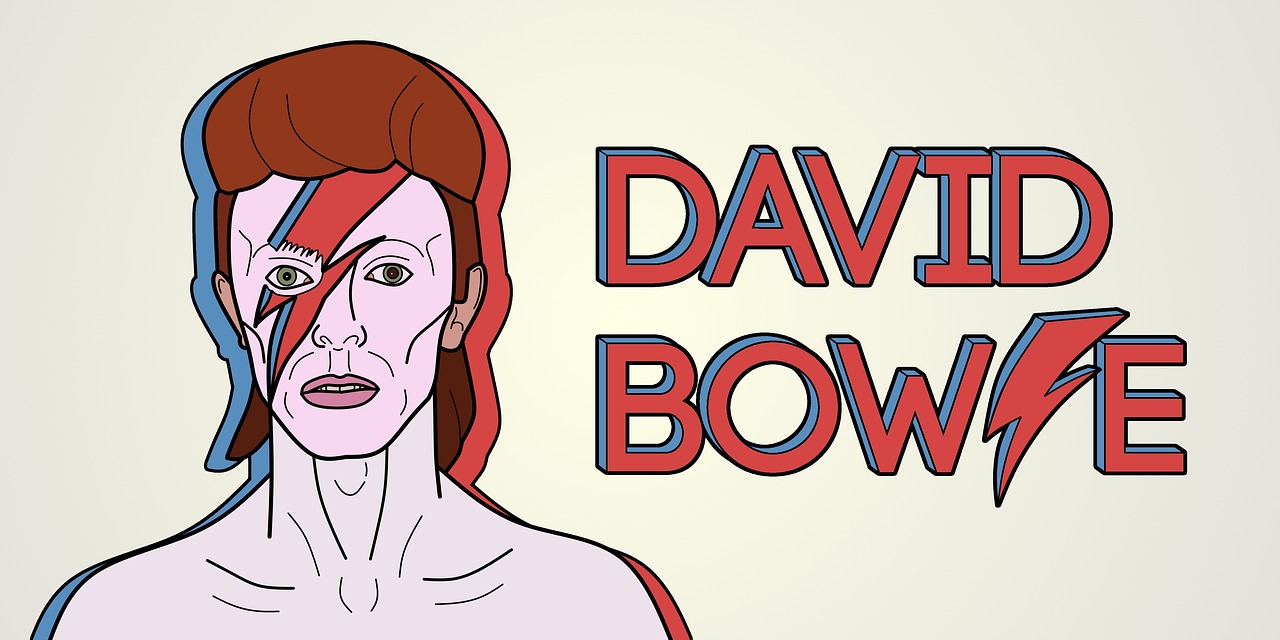
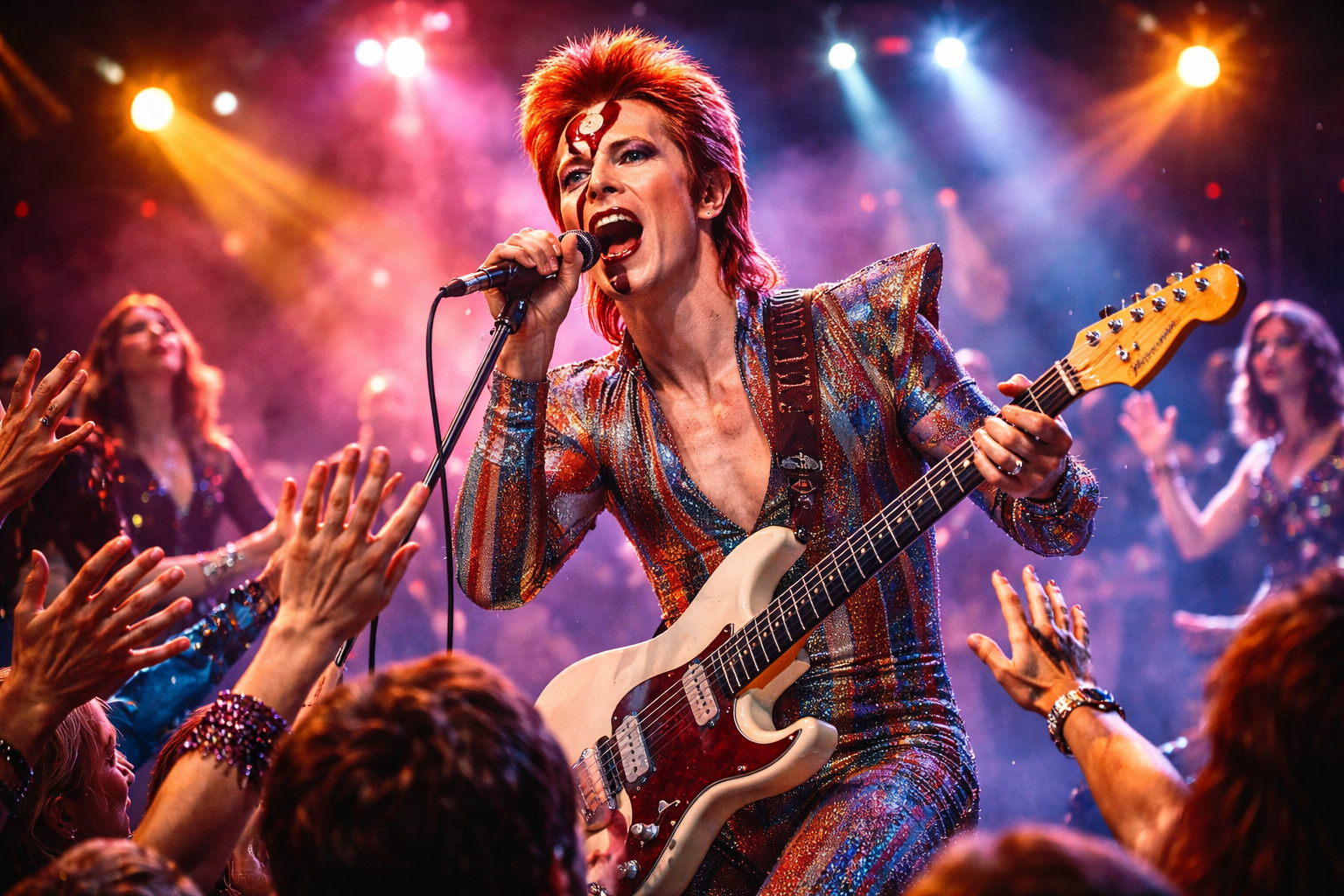
Before Ziggy, rock stars were mostly “real” guys in jeans and leather. They might dress up a bit, but the image was usually just background to the music. Bowie flipped that. With Ziggy Stardust he turned the whole show into the point: the red hair, the lightning‑bolt face paint, the tight suits, the space‑rock story, the way he sang as Ziggy rather than just as himself.

Ziggy was the star of a mini rock opera: an alien messenger sent to Earth in the last five years of the planet’s life, trying to bring a message of hope while slowly getting corrupted by fame and sex. This kind of storytelling—where character, costume, vocals, and album all fit together—wasn’t new, but it hadn’t been done in such a campy, theatrical, pop‑accessible way. Ziggy made rock feel like a space‑age musical you could dance to, not just a jukebox.

Musically, Ziggy Stardust blended glam rock, hard rock, and art‑rock into something catchy but still weird. Songs like “Starman,” “Suffragette City,” and “Ziggy Stardust” pulled in young fans who wanted something flashier than classic rock and more rock‑based than pure pop. The result was that Bowie didn’t just get a new sound; he created a new template for how albums could tell a story and still climb the charts.

Live shows became part of the myth, too. Bowie’s Ziggy tours in the early seventies were wild. The stage, the lights, the Spiders from Mars, the way he spaced‑walked across the stage—it all felt like a futuristic theater piece first, and a concert second. That raised the bar for other artists, who realized that if they wanted to stand out, they couldn’t just play well; they had to perform well.

Artists that came after Ziggy—everyone from Queen and the Rolling Stones to Eurythmics, Lady Gaga, and even parts of Kanye West’s persona—took notes on how Bowie used character, costume, and irony to keep his audience guessing. In other words, Ziggy didn’t just influence glam rock; he helped teach pop music that theatricality and image are part of the music itself.


Shaking Up Gender, Sexuality, and Identity

Maybe Ziggy’s most powerful impact wasn’t about clothes or concerts, but about what people felt allowed to be. In the early 1970s, talking openly about being bisexual or experimenting with gender‑bending fashion was still risky in many places. Bowie didn’t just whisper about it; he sang it and wore it on stage.

Ziggy Stardust blurred the lines between male and female, “normal” and “weird,” human and alien. He wore makeup, androgynous suits, and openly flirted with both men and women in interviews and songs. For young listeners who felt different—too geeky, too artsy, too queer, too “out there”—Ziggy was a permission slip. He showed that being confusing, mixed‑up, or in-between could be cool, even iconic.

Bowie’s Ziggy persona also helped normalize conversations about sexuality in pop. When he told the music press he was bisexual, it was bold, but it fit into how fans already saw Ziggy: a figure who could love anyone, look like anything, and still be the hero. That didn’t fix discrimination, of course, but it did give a lot of people a sense that they weren’t alone, that rock and pop could belong to outsiders too.

For many fans, Ziggy wasn’t just a character; he was a role model. He modeled a kind of self‑invention: you don’t have to be born in one fixed box; you can build and rebuild your identity. That idea—“you can be whoever you want to be on stage and maybe off it too”—became a core part of modern pop culture.


Turning the Rock Star into a Character, Not Just a Person

Before Ziggy, most famous musicians were seen as “real” people who happened to be good at singing or playing instruments. Bowie upped the game by treating the rock star as a role, like in a play. Ziggy Stardust wasn’t just a nickname; he was a full‑on character with a backstory, a costume, and an arc: arrival, rise, corruption, and death.

This had a few big effects.

First, it made fans more critical. When Bowie announced in 1973 that the Ziggy Stardust show was “the last show that we’ll ever do,” he literally killed off Ziggy in front of the audience. That act made it clearer that rock stardom itself could be a kind of costume, that behind the image were decisions, strategies, and even exhaustion.

Second, it opened the door for other artists to create multiple personas. After Bowie, musicians didn’t have to stick to one “authentic” version of themselves for their whole careers. They could be chameleons, like Prince, Madonna, or Lady Gaga, each reinventing their image and story with every album cycle.

Third, it turned the idea of “authenticity” on its head. Ziggy was obviously fake, obviously theatrical, and yet felt emotionally real to listeners. That helped people see that being genuine doesn’t mean being totally “natural” or “simple.” It can mean being honest about wanting to transform, to play roles, and to experiment with who you are.


How Ziggy Stardust Influenced Fashion and Visual Culture

Ziggy’s impact wasn’t limited to albums and fan zines. It spilled over into fashion, magazines, TV, and even how people dressed at home. The bright colors, tight suits, platform boots, and wild makeup that Ziggy wore became part of the glam rock look and later rippled into punk, new wave, and electronic scenes.

Designers and stylists noticed that Bowie didn’t just pick outfits; he curated a whole aesthetic. His collaborations with designers and makeup artists helped establish the idea that a musician’s visual world—their hair, clothes, lighting, and stage sets—was just as important as the songs.

That focus on image as content also helped push music videos into the spotlight. Later, when MTV came along, artists already knew they needed to look memorable, not just sound good. Ziggy’s emphasis on visual storytelling stands behind the way many modern stars think in terms of “eras,” “looks,” and “campaigns,” not just singles and albums.


The Lasting Cultural Impact: Why Ziggy Still Matters

Decades after Ziggy Stardust burned out, people still listen to the album, still dress up as Ziggy for Halloween or cosplay, and still talk about him as a symbol of reinvention. Why? Part of it is that Ziggy captured a very specific feeling—being on the edge of something big, a little scared, a little excited, and ready to transform.

Ziggy’s story also works as a warning as much as a fantasy. In the album, Ziggy becomes addicted to fame and crowds, loses his message, and finally dies. That arc feels familiar in an age of social media, influencers, and viral fame, where attention can feel life‑giving and destructive at the same time.

More subtly, Ziggy helped normalize the idea that people can change. In a world where people are often told to “be themselves,” Ziggy says it’s okay to keep trying on new selves, to experiment, to fail, and to retire a look when it no longer fits. That message still resonates with anyone who has ever felt like they don’t fit in, or who wants to try on a bolder version of themselves, even if just for a night.


Ziggy Stardust as a Cultural Turning Point

David Bowie’s Ziggy Stardust persona didn’t just make him a superstar. It changed how music, fashion, and pop culture think about identity, performance, and image. Ziggy turned the rock star into a character, blurred the lines between male and female, and showed that being unusual could be a source of strength rather than shame.

It also helped teach future artists that a pop career doesn’t have to be one long, consistent “self.” It can be a series of experiments, personas, and visual worlds, each with its own story and mood. That idea is now everywhere in pop, but in the early 1970s, Ziggy Stardust was one of the first clear blueprints.

So when people ask what the impact of David Bowie’s Ziggy Stardust persona was, they’re really asking how a pretend alien rock star changed how we see ourselves, how we dress, and how we experience music. The answer is: more than most fictional characters ever do, Ziggy Stardust helped real people feel a little more free to be whoever they wanted to be.

How Did David Bowie’s Music Evolve Over Time?

David Bowie, an artist renowned for his ever-evolving musical persona, embarked on a remarkable and chameleon-like journey through the world of music. Over the span of several decades, his music underwent a series of transformations that reflected his personal growth, artistic experimentation, and a rapidly changing music landscape. In this article, we will delve into the evolution of David Bowie’s music over time, tracing the various phases and styles that defined his extraordinary career.

The Mod and Rock ‘n’ Roll Influences (1960s):
David Bowie’s musical journey began in the 1960s, a time when he was deeply influenced by mod culture and early rock ‘n’ roll. His debut single, “Liza Jane” (1964), released under the name Davie Jones with the King Bees, showcased his initial foray into music. During this period, he explored rock ‘n’ roll with his self-titled debut album, “David Bowie” (1967), and songs like “Can’t Help Thinking About Me.” These early works provided a glimpse of his budding talent and the influences that would shape his future.

Folk and Psychedelic Rock (Late 1960s – Early 1970s):
As the 1960s gave way to the early 1970s, Bowie’s music shifted towards folk and psychedelic rock. Albums like “Space Oddity” (1969) and “The Man Who Sold the World” (1970) delved into these genres, with the iconic “Space Oddity” single serving as a notable example. These albums showcased Bowie’s versatility and his ability to experiment with different musical styles.

The Rise of Ziggy Stardust and Glam Rock (Early 1970s):
One of the most defining moments in Bowie’s career came with the advent of glam rock. His creation of the Ziggy Stardust persona marked a turning point. The album “The Rise and Fall of Ziggy Stardust and the Spiders from Mars” (1972) catapulted him to international stardom. Glam rock was characterized by its extravagant fashion, theatrical performances, and bold, anthemic music. Bowie’s Ziggy Stardust era became synonymous with glam rock, with iconic tracks like “Starman” and “Suffragette City” epitomizing the genre.

Soul and R&B (Mid-1970s):
In the mid-1970s, Bowie explored soul and R&B music, heavily influenced by the American soul sound. His album “Young Americans” (1975) marked a significant departure from glam rock. Songs like the title track “Young Americans” and the chart-topping hit “Fame” showcased his rich baritone vocals and the incorporation of funk and soul rhythms. This transition demonstrated his remarkable adaptability.

Funk and Disco (Mid-1970s):
Bowie’s exploration of funk and disco continued with his 1976 album “Station to Station.” This album marked a transition from soul to a more electronic and funk-oriented sound. The title track, “Station to Station,” and “Golden Years” exemplified his foray into these genres. Bowie’s collaboration with musicians like Carlos Alomar and Luther Vandross contributed to the album’s distinctive sound.

Electronic and Experimental Music (Late 1970s):
The late 1970s saw Bowie pushing the boundaries of music even further. Albums like “Low” (1977), “Heroes” (1977), and “Lodger” (1979), collectively known as the “Berlin Trilogy,” showcased his experimentation with electronic and ambient music. Collaborating with Brian Eno, Bowie created innovative and instrumental-driven compositions that challenged conventional song structures. These albums were marked by their atmospheric and avant-garde soundscapes.

New Wave and Post-Punk (Late 1970s – Early 1980s):
Bowie’s influence on the New Wave and post-punk movements of the late ’70s and early ’80s was substantial. His Berlin Trilogy and the subsequent albums “Scary Monsters (And Super Creeps)” (1980) and “Let’s Dance” (1983) incorporated elements of these genres. The track “Ashes to Ashes” from “Scary Monsters” is often considered a pioneering post-punk song, and Bowie’s continued experimentation resonated with the evolving musical landscape.

Pop and Dance Music (Early 1980s):
In the early 1980s, Bowie embraced pop and dance music, which resulted in his commercially successful album “Let’s Dance” (1983). The title track, “Modern Love,” and “China Girl” tapped into the vibrant, consumer-driven culture of the time. Bowie’s music during this period was infectious and celebrated the exuberance of the decade, even as it explored themes of love and relationships.

Industrial and Alternative Rock (1990s):
Bowie’s willingness to adapt and experiment continued in the 1990s. Albums like “Outside” (1995) and “Earthling” (1997) explored industrial and alternative rock territory. Bowie’s collaboration with artists like Trent Reznor of Nine Inch Nails demonstrated his embrace of the industrial sound, and these albums resonated with a new generation of listeners.

Nostalgia and Reflection (2000s):
As the new millennium began, Bowie’s music turned introspective. His album “Heathen” (2002) featured reflective songs like “Sunday” and “Slip Away.” Bowie’s introspection and nostalgic undertones resonated with a generation that was beginning to grapple with the passage of time and its impact on identity.

Experimental and Art Rock (2010s):
Bowie’s final albums, “The Next Day” (2013) and “Blackstar” (2016), featured a return to more experimental and art rock elements. These albums showcased his enduring creativity and ability to blend various styles into a coherent and innovative sound. “Blackstar” was particularly significant, given its release shortly before his passing in 2016. The album’s avant-garde jazz-infused sound and poignant lyrics addressed themes of mortality and transcendence.

David Bowie’s remarkable musical evolution reflected his innate ability to adapt and experiment with different styles. From his early rock ‘n’ roll influences and the glam rock extravagance of Ziggy Stardust to his exploration of soul, funk, disco, and electronic music, Bowie’s career was a dynamic exploration of the ever-changing musical landscape. His willingness to challenge conventions and his continuous artistic reinvention solidified his status as an icon of musical innovation and evolution. David Bowie’s legacy is not only one of timeless music but also a testament to the enduring spirit of creative exploration in the world of music.

How Did David Bowie’s Music Reflect Societal Changes?

David Bowie, the legendary musician and cultural icon, was not only a master of musical innovation but also a mirror to the societal changes of his time. Throughout his prolific career spanning several decades, Bowie’s music often reflected and responded to the shifting cultural, political, and social landscapes of the eras in which he lived and worked. In this article, we will explore how David Bowie’s music served as a reflection of societal changes, offering a unique lens through which to view the evolving world around him.

The 1960s: The Birth of Bowie:
David Bowie’s early career coincided with the tumultuous 1960s, a decade characterized by significant social and cultural upheaval. In the midst of the counterculture movement, Bowie emerged as a young artist eager to challenge norms and conventions. His 1969 single “Space Oddity” not only catapulted him to fame but also captured the sense of space exploration and technological optimism that defined the era. The song’s release coincided with the Apollo 11 moon landing, making it particularly resonant with the zeitgeist of the time.

Glam Rock and Gender Identity:
The early 1970s saw the rise of glam rock, and Bowie, with his Ziggy Stardust persona, became one of its leading figures. Glam rock was a subculture that embraced flamboyant fashion, androgyny, and theatrical performances. Bowie’s adoption of Ziggy Stardust allowed him to explore issues of gender identity and sexual fluidity, topics that were rarely discussed openly at the time. Through Ziggy, Bowie challenged traditional notions of masculinity and femininity, providing a platform for discussions on identity and self-expression.

The 1970s: Reflections on Alienation and Identity:
Bowie’s 1970s albums, such as “Hunky Dory,” “The Rise and Fall of Ziggy Stardust and the Spiders from Mars,” and “Diamond Dogs,” delved into themes of alienation, identity, and societal disintegration. Songs like “Changes” and “Rock ‘n’ Roll Suicide” resonated with a generation grappling with cultural shifts and a sense of displacement. Bowie’s music offered a voice to those seeking to define themselves in a rapidly changing world.

The 1980s: Globalization and Individualism:
As the 1980s dawned, Bowie’s music continued to evolve, reflecting the growing influence of globalization and a burgeoning sense of individualism. His album “Scary Monsters (And Super Creeps)” (1980) featured the hit single “Ashes to Ashes,” which touched upon themes of personal reflection and the impact of fame. The music video for “Ashes to Ashes” was a surreal and iconic visual representation of the era’s technological advances.

The 1980s: Dance, Pop, and Consumer Culture:
In the early 1980s, Bowie embraced dance and pop music with his album “Let’s Dance” (1983). The title track and other songs from the album, such as “Modern Love” and “China Girl,” tapped into the vibrant, consumer-driven culture of the time. Bowie’s music during this period was infectious and celebrated the exuberance of the decade, even as it explored themes of love and relationships.

The 1990s: Postmodernism and Identity Politics:
Bowie’s music in the 1990s reflected the postmodernist sensibilities of the era. His album “Outside” (1995) featured an intricate narrative and characters that delved into themes of art, identity, and surveillance. It was a reflection of a world grappling with identity politics, the blurring of reality and fiction, and the proliferation of information in the digital age.

The 2000s: Nostalgia and Reflection:
As the new millennium began, Bowie’s music turned introspective. His album “Heathen” (2002) featured reflective songs like “Sunday” and “Slip Away.” Bowie’s introspection and nostalgic undertones resonated with a generation that was beginning to grapple with the passage of time and its impact on identity.

The 2010s: Farewell and Legacy:
Bowie’s final album, “Blackstar” (2016), released shortly before his death, was a haunting and experimental work that delved into themes of mortality and transcendence. Bowie’s passing in 2016 marked the end of an era, but his music and artistic legacy continue to influence subsequent generations of musicians and artists.

David Bowie’s music served as a powerful reflection of the societal changes and cultural shifts that defined the decades in which he lived and worked. From the counterculture movements of the 1960s to the gender identity explorations of the 1970s, from the individualism and consumerism of the 1980s to the postmodernist complexities of the 1990s, Bowie’s music was a dynamic and ever-evolving commentary on the world around him. His ability to adapt, innovate, and engage with the issues of his time solidified his status as a musical and cultural icon, leaving an indelible mark on the history of music and society.

What Were David Bowie’s Major Music Genres?

David Bowie, the iconic and chameleon-like artist, was renowned for his ability to seamlessly transition between various musical genres throughout his illustrious career. His versatility and willingness to experiment with different styles made him one of the most influential musicians of the 20th century. In this article, we will explore the major music genres that David Bowie explored and mastered during his extraordinary journey in the world of music.

Rock and Roll:
David Bowie’s early musical influences were deeply rooted in rock and roll. His fascination with American rock pioneers like Elvis Presley, Little Richard, and Chuck Berry had a profound impact on his music. Bowie’s early singles and albums, such as “Space Oddity” (1969) and his self-titled debut album “David Bowie” (1967), showcased his affinity for rock and roll, and his charismatic stage presence was already evident.

Folk and Psychedelic Rock:
During the late 1960s and early 1970s, Bowie delved into folk and psychedelic rock, embracing the counterculture movements of the era. Albums like “Space Oddity” and “The Man Who Sold the World” (1970) featured folk and psychedelic elements, with songs like “Memory of a Free Festival” and “All the Madmen” displaying his experimentation with these genres.

Glam Rock:
Perhaps one of the most defining moments in Bowie’s career was the advent of glam rock. His creation of the Ziggy Stardust persona and the release of “The Rise and Fall of Ziggy Stardust and the Spiders from Mars” (1972) catapulted him to international stardom. Glam rock was characterized by its extravagant fashion, theatrical performances, androgynous style, and androgynous style, and bold, anthemic music. Bowie’s Ziggy Stardust era became synonymous with glam rock, with iconic tracks like “Starman” and “Suffragette City” embodying the genre’s spirit.

Soul and R&B:
In the mid-1970s, David Bowie ventured into soul and R&B music, heavily influenced by the American soul sound. His album “Young Americans” (1975) epitomized this genre shift, featuring songs like the title track “Young Americans” and the chart-topping hit “Fame.” Bowie’s rich baritone vocals and the incorporation of funk and soul rhythms marked a significant departure from his glam rock persona.

Funk and Disco:
Bowie’s exploration of funk and disco continued with his 1976 album “Station to Station.” This album marked a transition from soul to a more electronic and funk-oriented sound. The title track, “Station to Station,” and “Golden Years” exemplify Bowie’s foray into these genres. His collaboration with musicians like Carlos Alomar and Luther Vandross contributed to the album’s distinctive sound.

Electronic and Experimental Music:
The late 1970s saw Bowie pushing the boundaries of music even further. Albums like “Low” (1977), “Heroes” (1977), and “Lodger” (1979), collectively known as the “Berlin Trilogy,” showcased his experimentation with electronic and ambient music. Collaborating with Brian Eno, Bowie created innovative and instrumental-driven compositions that challenged conventional song structures.

New Wave and Post-Punk:
Bowie’s influence on the New Wave and post-punk movements of the late ’70s and early ’80s was substantial. His Berlin Trilogy and the subsequent albums “Scary Monsters (And Super Creeps)” (1980) and “Let’s Dance” (1983) incorporated elements of these genres. The track “Ashes to Ashes” from “Scary Monsters” is often considered a pioneering post-punk song.

Pop and Dance Music:
In the 1980s, Bowie embraced pop and dance music, which resulted in his commercially successful album “Let’s Dance” (1983). The title track, “Modern Love,” and “China Girl” showcased his knack for crafting infectious pop hits that dominated the charts during the era. This period solidified Bowie’s status as a global pop icon.

Industrial and Alternative Rock:
Bowie’s willingness to adapt and experiment continued in the 1990s. Albums like “Outside” (1995) and “Earthling” (1997) explored industrial and alternative rock territory. Bowie’s collaboration with artists like Trent Reznor of Nine Inch Nails demonstrated his embrace of the industrial sound.

Experimental and Art Rock:
Bowie’s final albums, “Heathen” (2002), “Reality” (2003), and “The Next Day” (2013), featured a return to more experimental and art rock elements. These albums showcased his enduring creativity and ability to blend various styles into a coherent and innovative sound.

Jazz:
Bowie’s fascination with jazz music was apparent in his 2016 album “Blackstar,” released shortly before his death. This avant-garde jazz-infused album was a departure from his previous work and was met with critical acclaim. It demonstrated Bowie’s unwavering commitment to artistic exploration.

David Bowie’s ability to traverse a wide array of music genres and adapt to evolving musical landscapes is a testament to his status as a musical visionary. From rock and roll to glam rock, soul, funk, disco, electronic, and beyond, Bowie’s career spanned decades of musical experimentation. His impact on the music industry and his ability to inspire subsequent generations of artists showcase his enduring legacy as an artist who fearlessly embraced change and innovation. Bowie’s chameleon-like nature will forever be celebrated as a hallmark of his remarkable musical journey.

Who Has David Bowie Influenced?

David Bowie, an iconic figure in the world of music and culture, left an indelible mark on the music industry that extended far beyond his own era. His innovative approach to music, fashion, and art made him not only a legendary artist but also a trailblazer whose influence has reverberated across generations and genres. In this article, we will explore the profound impact that David Bowie has had on various artists and artistic movements.

Pop and Rock Music:

David Bowie’s influence on the pop and rock music landscape is immeasurable. His ability to reinvent himself and experiment with different musical styles set a precedent for countless musicians who followed in his footsteps. Notable artists influenced by Bowie include:

Madonna: The Queen of Pop has openly acknowledged Bowie’s influence on her music, style, and persona. She admired his ability to constantly evolve and redefine himself, a trait she incorporated into her own career.

Prince: Prince, another music legend, was deeply inspired by Bowie’s genre-blurring approach. Bowie’s impact can be seen in Prince’s eclectic musical style and theatrical stage presence.

U2: The Irish rock band U2, led by Bono, found inspiration in Bowie’s willingness to experiment with sound and image. Bono has cited Bowie as a major influence on his own artistic journey.

Radiohead: The British rock band Radiohead’s exploration of unconventional song structures and themes draws parallels to Bowie’s innovative approach to music. Bowie’s influence on Radiohead is evident in their album “OK Computer.”

Glam Rock:

As one of the pioneers of glam rock, David Bowie played a pivotal role in shaping the genre. Glam rock, characterized by its extravagant fashion and theatrical performances, has left a lasting impact on music and fashion. Bowie’s influence on glam rock can be seen in:

T. Rex: Marc Bolan and T. Rex, known for hits like “Bang a Gong (Get It On),” embraced the glam rock aesthetic. Bowie’s Ziggy Stardust persona and glittery glam style influenced Bolan’s own fashion choices.

Roxy Music: The British art rock band Roxy Music, led by Bryan Ferry, incorporated elements of glam rock into their music and image. Bowie’s influence is evident in their early albums.

Lou Reed: Although not a glam rocker, Lou Reed of The Velvet Underground collaborated with Bowie on the album “Transformer.” Bowie’s production work on this album helped shape Reed’s sound and introduced him to a wider audience.

New Wave and Post-Punk:

The New Wave and post-punk movements of the late ’70s and early ’80s were influenced by David Bowie’s boundary-pushing music and aesthetics. Artists in these genres drew inspiration from Bowie’s artistic reinventions, androgynous style, and experimentation:

Blondie: Debbie Harry and Blondie embraced the New Wave movement and experimented with pop, punk, and new wave influences. Bowie’s chameleon-like approach to music and fashion influenced Harry’s eclectic style.

Siouxsie and the Banshees: Siouxsie Sioux, known for her influential work in the post-punk and gothic rock genres, admired Bowie’s ability to merge different musical elements. His impact is evident in the band’s music and style.

The Cure: Robert Smith of The Cure found inspiration in Bowie’s ability to evolve and explore new musical directions. Bowie’s impact can be heard in The Cure’s evolving sound over the years.

Electronic and Synthpop:

Bowie’s foray into electronic and synthpop music during the late ’70s and early ’80s laid the groundwork for the electronic music revolution. Artists in the electronic music scene, as well as synthpop pioneers, were influenced by Bowie’s experimentation:

Depeche Mode: The influential synthpop band Depeche Mode found inspiration in Bowie’s exploration of electronic music on albums like “Low” and “Heroes.” His influence is particularly evident in their early work.

Nine Inch Nails: Trent Reznor, the mastermind behind Nine Inch Nails, was influenced by Bowie’s fusion of rock and electronic elements. Bowie’s collaboration with Reznor on the album “Outside” showcased their shared interest in experimental music.

Gary Numan: The synthpop pioneer Gary Numan incorporated elements of Bowie’s electronic experimentation into his own music. Bowie’s influence is heard in Numan’s breakthrough hit “Cars.”

Alternative and Indie Rock:

Bowie’s influence extended to alternative and indie rock artists who appreciated his artistic integrity, genre-blurring, and lyrical depth:

Arcade Fire: The Canadian indie rock band Arcade Fire cited Bowie as a major influence on their music and live performances. Bowie’s impact can be seen in their theatrical and emotionally charged shows.

The Strokes: The New York City-based rock band The Strokes drew inspiration from Bowie’s innovative spirit and his willingness to challenge the status quo. Bowie’s influence can be heard in their garage rock sound.

MGMT: The psychedelic rock duo MGMT admired Bowie’s ability to seamlessly blend genres and experiment with electronic music. His influence is reflected in their eclectic and genre-defying music.

Visual Arts and Fashion:

Beyond music, David Bowie’s influence extended to the visual arts and fashion. His ever-changing personas and groundbreaking fashion choices inspired artists and designers:

Alexander McQueen: The renowned fashion designer Alexander McQueen was influenced by Bowie’s fearless approach to fashion. Bowie’s androgynous style and avant-garde outfits resonated with McQueen’s design philosophy.

Jean-Michel Basquiat: The iconic American artist Jean-Michel Basquiat collaborated with Bowie on the 1983 film “Basquiat.” Bowie’s support and involvement in the art world helped raise Basquiat’s profile.

Cindy Sherman: The celebrated photographer and artist Cindy Sherman explored themes of identity and transformation in her work, echoing Bowie’s own exploration of persona and self-reinvention.

LGBTQ+ Community:

David Bowie’s openness about his bisexuality and gender exploration during the ’70s and beyond resonated with the LGBTQ+ community. He became an icon for those challenging societal norms and embracing their true selves:

Boy George: The androgynous and gender-fluid style of Boy George, frontman of Culture Club, was influenced by Bowie’s boundary-pushing fashion choices and fearless self-expression.

RuPaul: The legendary drag queen and host of “RuPaul’s Drag Race” has praised Bowie as a trailblazer who inspired countless LGBTQ+ artists to embrace their identities and express themselves authentically.

Queer Artists: Bowie’s impact on LGBTQ+ artists extends to a wide range of musicians, visual artists, writers, and performers who have found inspiration in his willingness to challenge traditional gender roles and societal expectations.

David Bowie’s enduring influence transcends music genres and artistic disciplines. His fearless exploration of music, fashion, and identity continues to inspire generations of artists who admire his artistic integrity, creativity, and fearless reinvention. Whether through his groundbreaking albums, iconic stage personas, or genre-defying sound, Bowie’s legacy lives on in the work of those he has influenced, making him a timeless and enduring cultural icon.